
Key Takeaways
- The LLC is the most commonly registered entity in Kyrgyzstan, favored for its accessible capital requirements and simplified governance under the Civil Code of the Kyrgyz Republic.
- Company registration and oversight in Kyrgyzstan fall under the Ministry of Justice, which maintains the Unified State Register of Legal Entities.
- Branch offices and representative offices allow foreign companies to establish a legal presence in Kyrgyzstan without forming a separate legal entity.
- Kyrgyzstan's membership in the Eurasian Economic Union and its bilateral investment treaty network continue to shape how foreign-owned entities are structured and administered over time.
Introduction to Entity Types in Kyrgyzstan
Kyrgyzstan is a landlocked Central Asian republic bordered by Kazakhstan, China, Tajikistan, and Uzbekistan. An independent nation since 1991, it operates under a civil law system that governs commercial activity through the Civil Code of the Kyrgyz Republic and the Law on Business Partnerships and Companies.
Company registration and oversight fall under the Ministry of Justice of the Kyrgyz Republic, which maintains the Unified State Register of Legal Entities. The country applies a standard territorial tax framework, with corporate income subject to a flat rate rather than offshore exemptions.
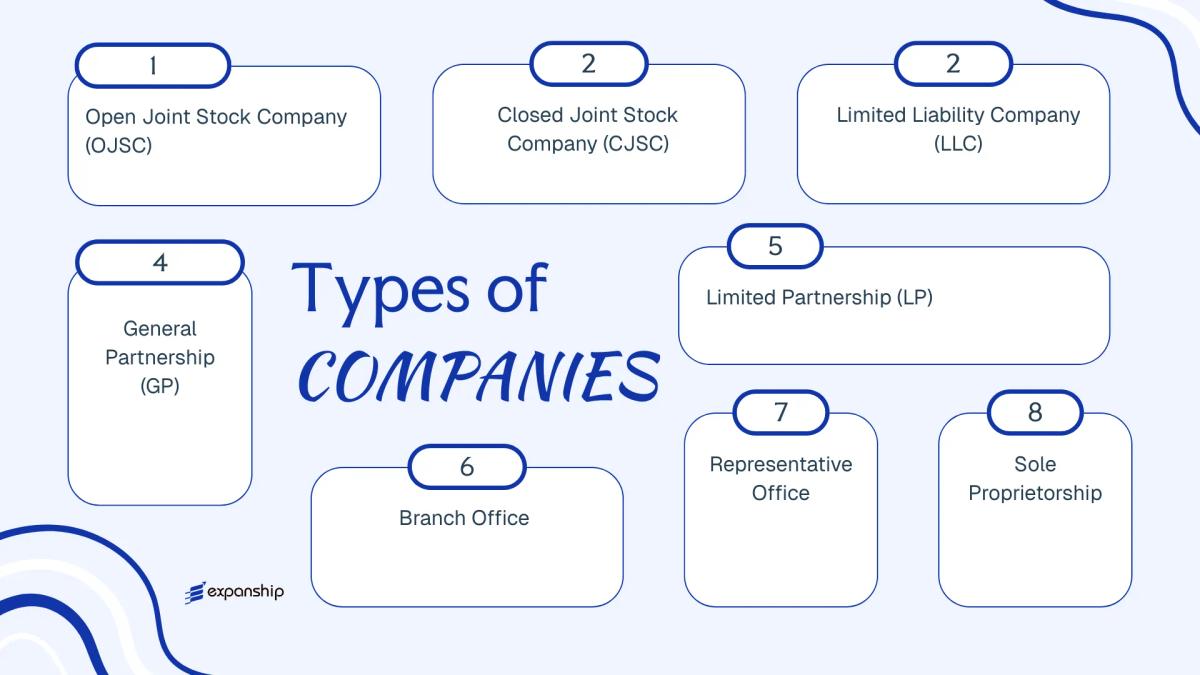
Several types of business entities in Kyrgyzstan are available to both domestic and foreign investors:
- Open Joint Stock Company (OJSC)
- Closed Joint Stock Company (CJSC)
- Limited Liability Company (LLC)
- General Partnership
- Limited Partnership
- Branch Office
- Representative Office
- Sole Proprietorship
Each structure carries distinct requirements around capital, liability, governance, and registration procedures. This article examines each of these Kyrgyzstan legal entity types in detail, covering the formation requirements, ownership rules, and practical considerations relevant to your business.
An Overview of Business Structures in Kyrgyzstan
Kyrgyzstan's company law framework provides several distinct business structures governed primarily by the Civil Code of the Kyrgyz Republic and supplemented by the Law on Business Partnerships and Companies. Understanding the business structures overview Kyrgyzstan offers is essential for structuring your operations correctly from the outset. Each entity type carries different implications for liability, ownership, and operational scope.
Business Structures at a Glance
| Entity Type | Legal Form | Liability | Taxed / Exempt | Local Trading | Minimum Members | Regulatory Authority | Governing Act |
|---|---|---|---|---|---|---|---|
| Open Joint Stock Company (OJSC) | Corporate entity | Limited to shares | Taxed | Yes | 1 shareholder | Ministry of Justice | Law on Joint Stock Companies |
| Closed Joint Stock Company (CJSC) | Corporate entity | Limited to shares | Taxed | Yes | 1 shareholder | Ministry of Justice | Law on Joint Stock Companies |
| Limited Liability Company (LLC) | Corporate entity | Limited to contribution | Taxed | Yes | 1 member | Ministry of Justice | Law on Business Partnerships and Companies |
| General Partnership | Unincorporated firm | Unlimited / joint | Taxed | Yes | 2 partners | Ministry of Justice | Civil Code |
| Limited Partnership | Unincorporated firm | Mixed liability | Taxed | Yes | 2 partners | Ministry of Justice | Civil Code |
| Branch Office | Non-legal entity | Parent liable | Taxed | Yes | Parent company | Ministry of Justice | Civil Code |
| Representative Office | Non-legal entity | Parent liable | Generally exempt from trading tax | No | Parent company | Ministry of Justice | Civil Code |
| Sole Proprietorship | Individual trader | Unlimited personal | Taxed | Yes | 1 individual | Tax authorities | Civil Code |
Each of these structures is examined in full in the sections below.
Open Joint Stock Company (OJSC) in Kyrgyzstan
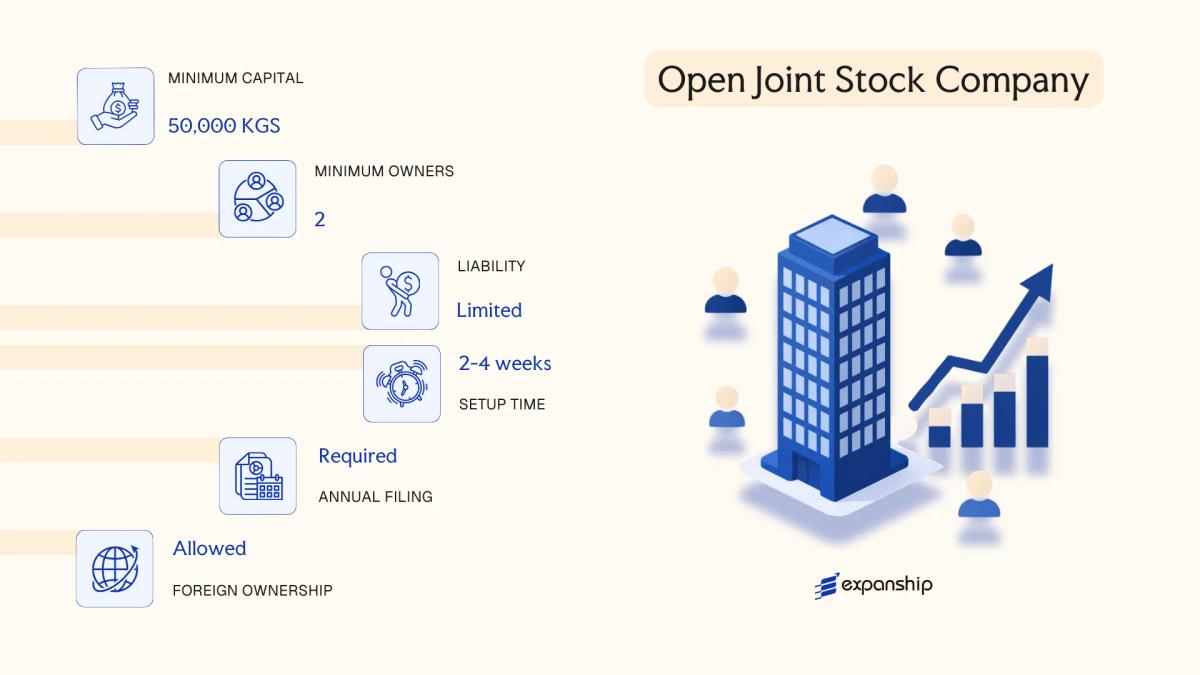
An open joint stock company (OJSC) in Kyrgyzstan — locally referenced as an OAO (Открытое акционерное общество) — is governed by the Law on Joint Stock Companies of the Kyrgyz Republic (2003, as amended). The entity carries separate legal personality, meaning it holds rights and obligations independently of its shareholders, who bear liability only to the extent of their contributed capital.
Shares in an OJSC may be offered to an unlimited pool of investors through public subscription and traded freely on the open market, including on the Kyrgyz Stock Exchange. This structure suits businesses that intend to raise capital from the public or plan a future securities listing.
Key Characteristics
| Requirement | Detail | Notes |
|---|---|---|
| Legal Form | Open Joint Stock Company (OJSC / OAO) | Separate legal entity; limited liability |
| Members | Shareholders; Board of Directors; Supervisory Board | Minimum 1 shareholder; no statutory maximum |
| Local Presence | Registered legal address in Kyrgyzstan required | Physical or c/o address acceptable |
| Share Capital | Minimum 500,000 KGS | Shares must be registered with the State Agency for Financial Market Regulation and Supervision (SFMRS) |
| Share Transferability | Freely transferable; public offerings permitted | No pre-emption restrictions on transfers |
| Privacy | Shareholder register is publicly accessible | Beneficial ownership disclosure required |
Focus Points
- Taxation: Subject to standard corporate profit tax at 10%, VAT at 12% on taxable supplies, and withholding tax on dividends paid to non-residents; stamp duty applies on share issuance registration.
- Annual Compliance: Mandatory annual general meeting of shareholders, audited financial statements, and annual report filed with the SFMRS.
- Economic Substance: No formal economic substance regime, but a registered address and locally appointed corporate officers are required.
- Treaty Access: Kyrgyzstan maintains double tax treaties with several CIS states and other jurisdictions; OJSC status generally qualifies for treaty benefits.
- Conversion: An OJSC may be reorganised into a closed joint stock company (CJSC) or limited liability company by shareholder resolution, subject to creditor notification procedures.
Suitable Uses and Limitations
An OJSC is used primarily for large-scale commercial operations, financial institutions, and businesses seeking public capital. The freely transferable share structure supports investor entry and exit without shareholder consent. The principal drawback is the compliance burden — mandatory independent audits, public disclosure of shareholders, and ongoing SFMRS oversight make this structure administratively intensive for smaller enterprises.
Best suited for large enterprises, financial sector firms, or businesses with genuine plans for public capital raising or securities listing.

Company Incorporation in Kyrgyzstan
Expanship assists with end-to-end OJSC registration, share issuance filing, and regulatory liaison with the SFMRS.
Closed Joint Stock Company (CJSC) in Kyrgyzstan
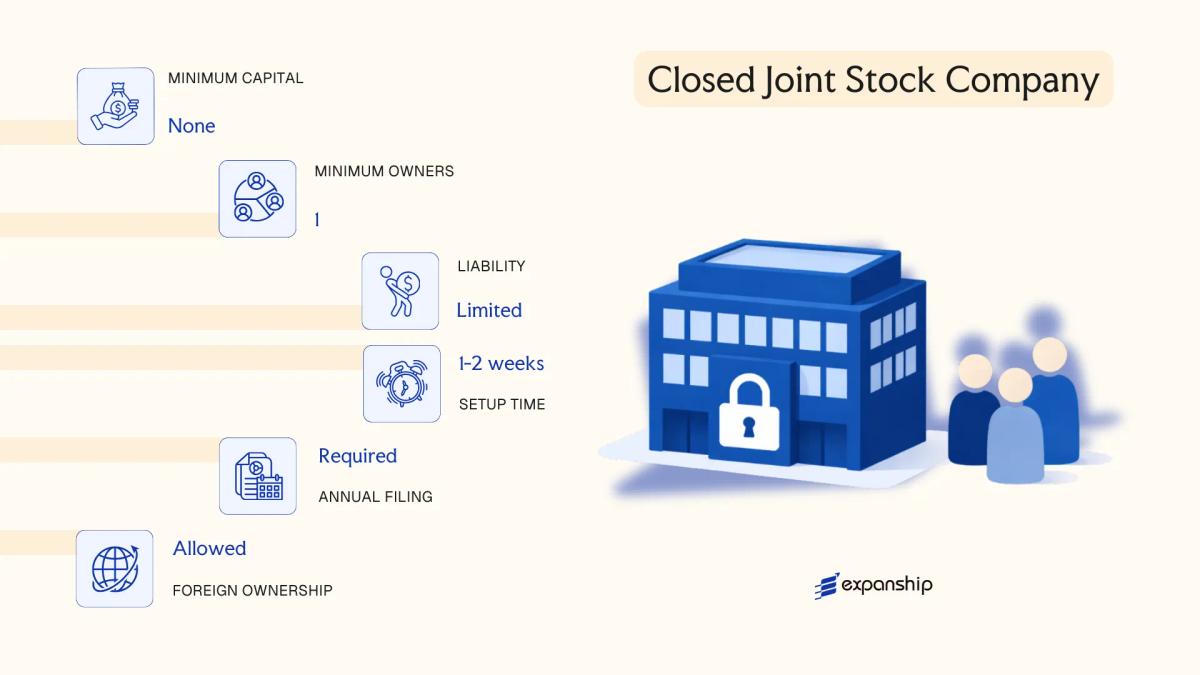
A closed joint stock company (CJSC) in Kyrgyzstan — known locally as a ZAO (Закрытое акционерное общество) — is governed by the Law of the Kyrgyz Republic "On Joint Stock Companies" (2003, as amended). It carries separate legal personality, meaning the entity holds rights and obligations independently of its shareholders.
Shares in a CJSC cannot be offered to the public or traded on open markets. This restriction makes the structure suitable for private investment arrangements where ownership must remain within a defined group. The Ministry of Justice handles registration, while the State Service for Financial Market Regulation and Supervision oversees securities-related compliance.
Key Characteristics
| Requirement | Detail | Notes |
|---|---|---|
| Legal Form | Closed Joint Stock Company (ZAO) | Separate legal personality; limited liability |
| Members | Shareholders; min. 1, max. 50 | Exceeding 50 shareholders triggers mandatory conversion to OJSC |
| Directors | Board of Directors (optional for small CJSCs); Executive body required | At least one executive officer must be appointed |
| Local Presence | Registered legal address required | No mandatory local director, but a registered address in Kyrgyzstan is compulsory |
| Capital | Minimum charter capital: 100 times the minimum calculation index (MCI) | Must be fully subscribed at incorporation; shares are not publicly tradeable |
| Privacy | Shareholder registry maintained internally; not fully public | Basic registration data is publicly accessible through the Ministry of Justice |
Focus Points
- Taxation: Subject to standard corporate profit tax (10%); VAT applies at 12% on turnover above the threshold; dividend withholding tax rates depend on applicable double tax treaties.
- Annual Compliance: Annual financial statements required; general shareholder meeting must be held; securities reporting obligations apply to the financial regulator.
- Treaty Access: Kyrgyzstan maintains double tax treaties with several CIS and other states; CJSC entities are generally eligible to claim treaty benefits.
- Conversion: Mandatory conversion to an OJSC is triggered if the shareholder count exceeds 50.
- Restrictions: Shares cannot be sold to third parties without first offering them to existing shareholders under pre-emption rules.
Closing Paragraph
A CJSC suits private holding structures, joint ventures, and family-owned businesses where controlled ownership and restricted share transfer are priorities. The pre-emption framework protects existing shareholders but can slow capital-raising efforts when external investment is needed.
A CJSC is best suited for private investors and joint venture partners who require a share-based structure with strict control over ownership transfers and no public market exposure.
Limited Liability Company (LLC) in Kyrgyzstan
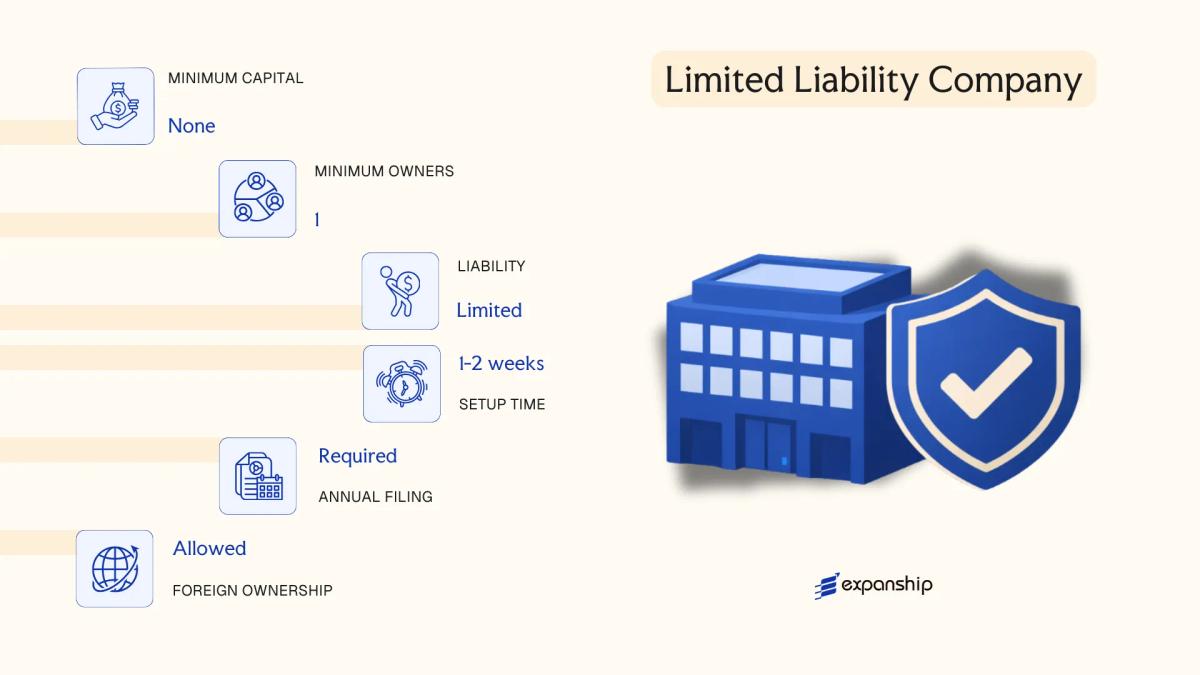
The limited liability company Kyrgyzstan OsOO (Общество с ограниченной ответственностью, abbreviated as OsOO) is the most widely used commercial structure in the country. It is governed primarily by the Law on Business Partnerships and Companies of the Kyrgyz Republic. As a separate legal entity, the OsOO shields its members from personal liability beyond their contributed capital share.
OsOO registration Kyrgyzstan falls under the jurisdiction of the Ministry of Justice, which administers the State Register of Legal Entities. The structure suits a wide range of business activities and is accessible to both resident and non-resident founders without restriction on nationality.
Key Characteristics
| Requirement | Detail | Notes |
|---|---|---|
| Legal Form | OsOO (Limited Liability Company) | Separate legal personality; civil liability limited to contributed capital |
| Members | 1 to 50 participants | Referred to as "participants" (учредители/участники); single-member OsOO permitted |
| Management | Director (sole executive body) or Board of Directors | Participants appoint management; a Supervisory Board is optional |
| Local Presence | Registered legal address required | Physical or registered office address within Kyrgyzstan mandatory |
| Capital | No statutory minimum capital | Capital divided into participatory shares; contributions can be monetary or in-kind |
| Privacy | Participant information filed with the State Register | Register is publicly accessible; beneficial ownership disclosure required under AML rules |
Focus Points
- Taxation: Subject to corporate profit tax at the standard rate; VAT registration required once turnover thresholds are met; withholding tax applies to dividends paid to non-resident participants; no general stamp duty on incorporation.
- Annual compliance: Annual financial statements must be filed; entities are subject to tax reporting obligations with the State Tax Service.
- Economic substance: No formal economic substance regime currently mandated for domestic OsOOs, though genuine local activity is expected for tax residency purposes.
- Treaty access: Kyrgyzstan maintains a network of double taxation treaties; OsOO entities may access treaty benefits subject to residency confirmation.
- Conversion: An OsOO may be reorganised into a joint stock company or another permitted legal form under applicable civil legislation.
Closing
The OsOO suits trading operations, holding structures, and service businesses where founders require liability protection without the administrative weight of a joint stock company. Its key advantage is structural simplicity; the absence of a statutory minimum capital requirement, however, may raise credibility concerns with certain institutional counterparties.
The OsOO is best suited for small to mid-sized businesses, foreign investors entering the market through a locally registered entity, and entrepreneurs seeking straightforward Kyrgyzstan LLC formation requirements without excess regulatory overhead.
Partnerships in Kyrgyzstan [General Partnership, Limited Partnership]
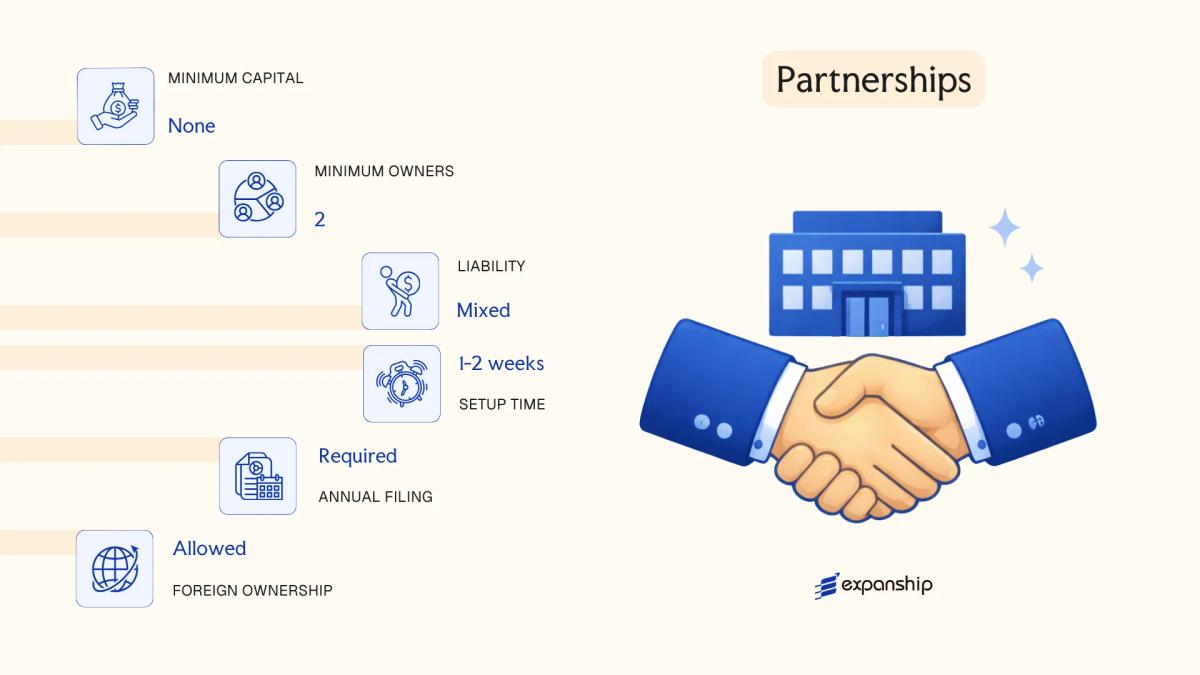
Under the Civil Code of the Kyrgyz Republic and the Law on Business Partnerships and Companies, partnerships are recognised as commercial entities with separate legal personality. Unlike sole proprietorships, partners are bound together through a constitutive agreement, and the firm operates as a distinct legal subject capable of holding property, entering contracts, and bearing obligations in its own name.
Partnership registration in Kyrgyzstan follows two distinct general and limited structures, each governed by the same foundational legislation but differentiated by the liability exposure of their participants.
Key Characteristics
| Requirement | General Partnership (Tolktoshtuk Sheriктik) | Limited Partnership / KomanditToo |
|---|---|---|
| Legal Form | Separate legal entity | Separate legal entity |
| Members | General Partners (min. 2, no statutory maximum) | Min. 1 General Partner + min. 1 Limited Partner |
| Liability | All partners bear unlimited joint liability | General partners: unlimited; limited partners: liability capped at contribution |
| Capital | No statutory minimum; defined in constitutive agreement | No statutory minimum; contributions specified per partner class |
| Local Presence | Registered legal address required in Kyrgyzstan | Registered legal address required in Kyrgyzstan |
| Privacy | Partner names typically disclosed in registration documents | Partner names typically disclosed; limited partner details may have reduced public exposure |
Focus Points
- Taxation: Partnerships are generally treated as pass-through entities for profits tax purposes; partners declare income at the individual or corporate level, subject to standard rates under the Tax Code of the Kyrgyz Republic, including applicable VAT obligations if turnover thresholds are met.
- Annual Compliance: Partnerships must file financial statements and maintain accounting records; the Ministry of Justice oversees registration, while the State Tax Service administers ongoing fiscal obligations.
- Treaty Access: Access to double taxation treaties depends on the tax residency of individual partners, not the partnership itself.
- Conversion: Conversion to another organisational form, such as an LLC, is permitted under the Civil Code subject to partner consent and re-registration.
- Restrictions: Foreign nationals may participate as partners, though certain regulated sectors impose ownership or activity restrictions.
Sub-Types
General Partnership (Tolktoshtuk Sheriктik)
All participants act as general partners, each carrying unlimited joint and several liability for the firm's obligations. This structure suits closely-held professional or family businesses where all principals take active management roles.
Limited Partnership (KomanditToo)
The KomanditToo introduces a two-tier membership structure: general partners manage the entity and bear unlimited liability, while limited partners contribute capital and are liable only to the extent of their contribution. Limited partners are barred from management participation as a condition of their liability protection.
Closing
Partnerships suit small professional firms, family businesses, and co-investment arrangements where participants accept defined liability terms. The pass-through tax treatment is a practical advantage, though the unlimited liability exposure for general partners represents a material structural risk.
Partnerships in Kyrgyzstan are best suited for closely-held businesses with two or more known principals who require a simple structure with pass-through taxation and do not require the liability shield of a corporate form.
Foreign Business Presence in Kyrgyzstan [Branch Office, Representative Office]
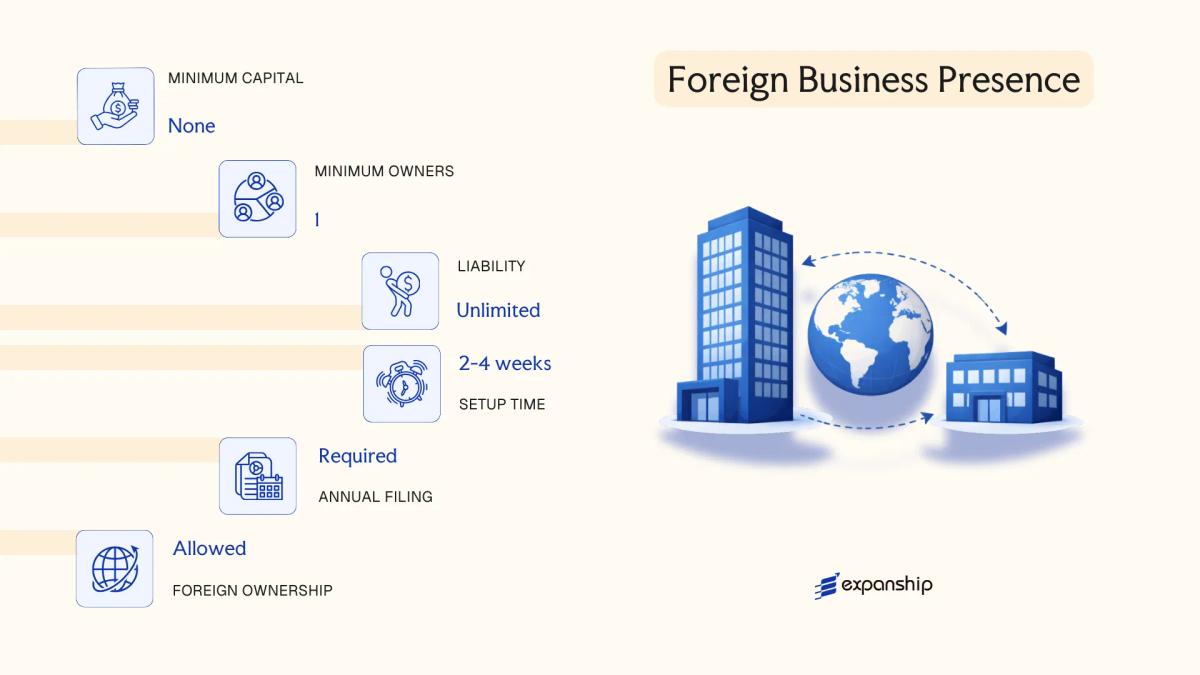
Foreign firms seeking to operate without incorporating a separate local entity may establish either a foreign company branch office in Kyrgyzstan or a representative office. Both structures are governed by the Civil Code of the Kyrgyz Republic and supplemented by the Law on Business Partnerships and Companies. Neither form constitutes a separate legal entity — each remains an extension of the parent company, which retains full liability for its obligations.
Registration of both structures falls under the authority of the Ministry of Justice of the Kyrgyz Republic. A branch may conduct commercial activities directly, whereas a representative office is restricted to non-commercial functions such as market research, liaison, and promotional activities on behalf of the parent.
Key Characteristics
| Requirement | Branch Office | Representative Office |
|---|---|---|
| Legal Form | Extension of foreign parent; no separate legal personality | Extension of foreign parent; no separate legal personality |
| Permitted Activities | Full commercial operations | Non-commercial only (liaison, research, promotion) |
| Head | Appointed director acting under a notarised power of attorney | Appointed representative under a notarised power of attorney |
| Local Presence | Registered legal address required in Kyrgyzstan | Registered legal address required |
| Capital Requirement | No statutory minimum | No statutory minimum |
| Privacy | Parent company details filed with the Ministry of Justice; publicly accessible | Parent company details filed; publicly accessible |
Focus Points
- Taxation: A branch is subject to corporate income tax at the standard rate of 10% on Kyrgyz-source profits; VAT applies at 12% on taxable turnover; withholding tax may apply on remittances to the foreign parent under domestic rules or applicable tax treaties.
- Treaty Access: Access to Kyrgyzstan's double tax treaties depends on the parent company's residency and the treaty's permanent establishment provisions — branch income may constitute a taxable permanent establishment.
- Annual Compliance: Both structures must file annual reports with the Ministry of Justice and maintain accounting records in accordance with local requirements; a branch must additionally submit tax declarations.
- Restrictions: A representative office cannot generate revenue or enter into commercial contracts in its own name; violations may result in deregistration.
- Conversion: Neither structure can be directly converted into a locally incorporated entity; establishing a new legal entity requires a separate incorporation process.
Closing
A branch office suits foreign companies testing the Kyrgyz market or executing contracts directly, while a representative office serves firms that require only a local contact point without revenue-generating activity. The primary limitation of both structures is the absence of liability separation — the parent bears full legal and financial exposure.
Foreign companies with an existing operational track record abroad that require a controlled, lower-commitment entry point into the Kyrgyz market before committing to full local incorporation.
Sole Proprietorship in Kyrgyzstan
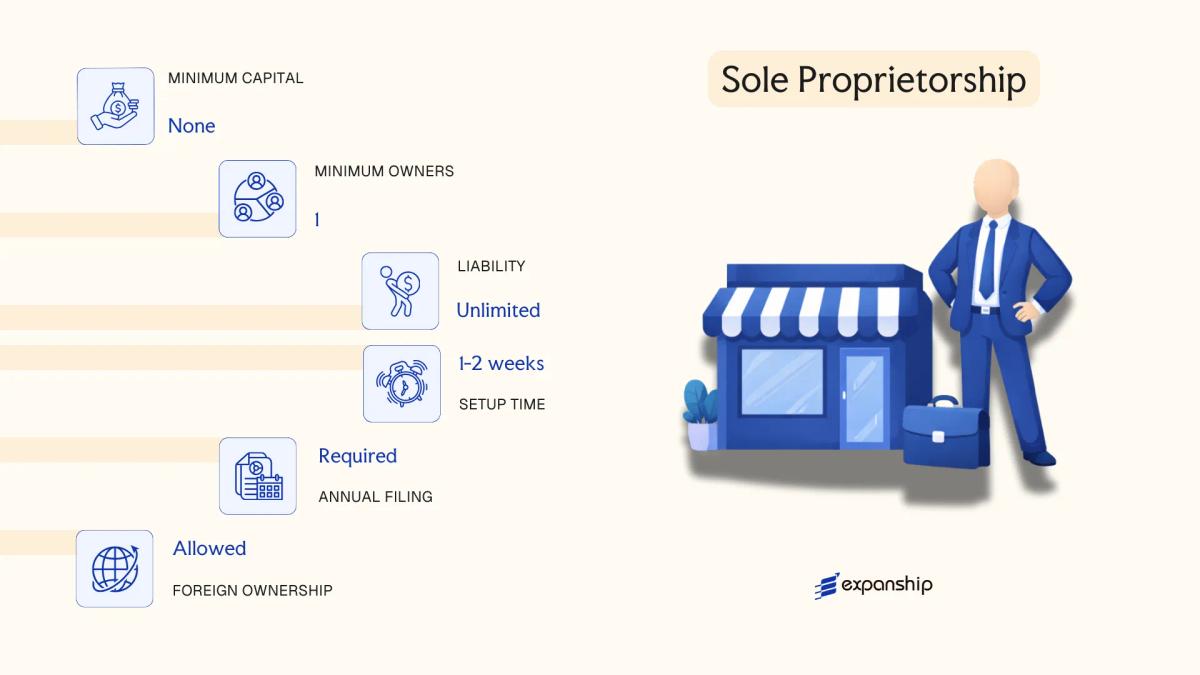
Sole proprietorship registration in Kyrgyzstan is governed by the Civil Code of the Kyrgyz Republic and the Law on State Registration of Legal Entities, Branches, and Representative Offices. Locally designated as an Individual Entrepreneur (Индивидуальный предприниматель, or IP), this structure carries no separate legal personality — the individual and the business are treated as a single subject under law.
Because no legal separation exists, the proprietor bears unlimited personal liability for all business obligations. Registration is processed through the Ministry of Justice of the Kyrgyz Republic, and the procedure is comparatively straightforward.
Key Characteristics
| Requirement | Detail | Notes |
|---|---|---|
| Legal Form | Individual Entrepreneur (IP) | Not a legal entity; natural person conducting commercial activity |
| Members | Single proprietor | No shareholders or co-owners permitted |
| Local Presence | Registered address required | Must correspond to actual place of business or residence |
| Capital | No statutory minimum | No paid-up capital requirement |
| Liability | Unlimited personal liability | Personal assets are exposed to business debts |
| Privacy | Proprietor's name is public record | Registered in the Unified State Register |
Focus Points
- Taxation: Subject to personal income tax at standard rates; may qualify for a patent-based flat-tax regime for eligible activities; VAT registration required if annual turnover exceeds the statutory threshold.
- Annual compliance: Obligated to file tax returns; accounting requirements are simplified relative to legal entities.
- Conversion: Can be converted into a legal entity such as an LLC, though the process requires a new registration rather than a structural transformation.
- Treaty access: As a natural person rather than a corporate entity, access to double tax treaty benefits in a corporate capacity does not apply.
- Restrictions: Foreign nationals face additional procedural requirements to register as an Individual Entrepreneur and must hold a valid right to reside and work in the country.
Closing
The IP structure suits freelancers, sole traders, and small-scale local service providers who require a minimal-cost legal basis for commercial activity. Its primary advantage is the low administrative burden at formation; the principal drawback is unlimited personal liability with no asset separation.
Best suited for individual residents or locally present foreign nationals operating low-risk, small-scale businesses who prioritise simplicity over liability protection.
How to Choose the Right Entity Type in Kyrgyzstan
Knowing how to choose a company type in Kyrgyzstan requires more than reviewing incorporation costs — the structure you register determines your tax position, liability exposure, governance obligations, and operational scope from day one.
Why Your Entity Choice Matters
Selecting the wrong structure produces concrete legal and financial consequences:
- Forming an LLC but conducting activities reserved for licensed entities — such as banking or insurance — without a separate licence results in regulatory action by the State Service for Financial Market Regulation and Supervision.
- Choosing a structure that lacks access to Kyrgyzstan's double tax treaty network means your foreign counterparties cannot apply reduced withholding rates, increasing cross-border transaction costs.
- Registering a representative office when your business intends to generate local revenue directly breaches the permitted scope of that form, exposing the parent entity to penalties under the Civil Code.
- Establishing a joint stock company when a single-person consultancy is planned imposes mandatory audit requirements and shareholder meeting obligations that add recurring annual costs with no operational benefit.
Key Factors to Consider
- Business Activity: Active trading, passive asset holding, and regulated sectors each correspond to distinct structures under the Law of the Kyrgyz Republic on Business Partnerships and Companies.
- Ownership Configuration: Single-owner operations favour an LLC or sole proprietorship, while multi-party arrangements with capital-raising needs point toward a joint stock structure.
- Tax Objectives: If eligibility for specific tax regimes or treaty benefits matters, the entity form must be one recognised under Kyrgyz tax law as a resident taxpayer.
- Operational Scope: A branch or representative office ties your legal standing directly to the parent company's liability and charter, which limits commercial autonomy.
- Substance Capacity: If you cannot maintain a physical presence, employees, or local decision-making, certain structures will face heightened scrutiny from tax authorities.
- Exit and Restructuring: Not all entity types permit conversion or redomiciliation — confirm whether your chosen structure allows those options before registration.
Compliance Services for Companies in Kyrgyzstan
Ongoing compliance support for Kyrgyz-registered entities, including annual filings, reporting obligations, and regulatory correspondence.
Conclusion
Incorporating a business in Kyrgyzstan means selecting from a defined set of structures, each carrying distinct legal and operational consequences under the Civil Code and the Law on Business Partnerships and Companies. The LLC remains the most commonly registered entity, favored for its accessible capital requirements and simplified governance. Open Joint Stock Companies suit firms seeking public capital access, while Closed Joint Stock Companies serve shareholder groups preferring transfer restrictions. General and limited partnerships apply to smaller ventures where personal liability terms are agreed among partners. Branch offices and representative offices extend foreign legal presence without creating separate legal entities. Sole proprietorships carry the lightest registration burden but expose the owner to unlimited personal liability.
Kyrgyzstan's continued engagement with bilateral investment treaties and its status within the Eurasian Economic Union signal a regulatory environment that continues to develop toward greater international alignment. That trajectory affects how foreign-owned entities are structured and administered over time.
How Expanship Can Assist You
Expanship's Kyrgyzstan company registration services are built around the specific entity structures this blog covers — from LLCs and CJSCs to branch offices and sole proprietorships. Each structure carries distinct obligations under Kyrgyz law, and filings run through the Ministry of Justice and the State Registration Service. Knowing which entity fits your business is only part of the work; executing the registration correctly is another matter entirely.
Expanship supports your business across every stage of the process, from initial documentation through to ongoing compliance.
- Document preparation and notarization
- Registered agent and legal address provision
- Government filing and liaison with the State Registration Service
- Post-incorporation compliance management
- Banking introduction assistance
Your corporate services in Kyrgyzstan don't have to be figured out alone. Reach out to Expanship Kyrgyzstan to discuss your specific situation.
Frequently Asked Questions (FAQ)
The Limited Liability Company (LLC) is the most frequently registered business structure. Its relatively low minimum capital requirements, flexible ownership rules, and simplified governance make it the default choice for small and medium-sized enterprises.
An LLC restricts share transferability and operates under a closed ownership model, while an OJSC can offer shares publicly and must meet stricter disclosure obligations under the Law on Joint Stock Companies. Both structures are subject to standard corporate profit tax, but the OJSC carries significantly higher ongoing compliance and reporting burdens.
The LLC offers comparatively greater privacy among domestic structures. Shareholder information is filed with the Ministry of Justice but is not broadly publicised in the same manner as OJSC shareholding disclosures. Nominee arrangements are not formally prohibited under Kyrgyz law, though their enforceability depends on underlying contractual terms.
A sole proprietorship and an LLC can both be formed by one individual. General Partnerships and Limited Partnerships require a minimum of two participants, as the legal form itself presupposes joint liability or a combination of general and limited partners.
Foreigners may register an LLC, OJSC, CJSC, or sole proprietorship without restrictions on nationality under the Law on Business Partnerships and Companies. A Branch Office or Representative Office is available to foreign legal entities operating through their parent company. Certain regulated sectors may impose additional licensing requirements regardless of entity type.
Reorganisation between entity types is permitted under the Civil Code of the Kyrgyz Republic, including conversion of a CJSC to an OJSC or transformation of a partnership into a company with limited liability. The process requires creditor notification, updated registration filings with the Ministry of Justice, and reissuance of founding documents.
LLCs, OJSCs, and CJSCs all hold separate legal personality, meaning the entity itself can own assets, enter contracts, and bear liabilities independently of its owners. Sole proprietorships do not constitute a separate legal person — the individual owner remains personally liable for all business obligations. General Partnerships occupy an intermediate position, with shared liability among partners rather than a fully independent legal identity.
Legal Disclaimer
The information provided in this article is for general informational purposes only and does not constitute legal, tax, or professional advice. While we strive to ensure the accuracy and timeliness of the content, laws and regulations are subject to change, and the application of laws can vary widely based on specific facts and circumstances.
Readers should not act upon this information without seeking professional counsel tailored to their individual situation. Expanship and its authors disclaim any liability for actions taken or not taken based on the content of this article.
For specific advice regarding your business setup, compliance requirements, or any legal matters, please consult with qualified legal and tax professionals in the relevant jurisdiction.