
Key Takeaways
- Business registration in the FSM is administered by the Department of Justice through the Registrar of Corporations at the national level, with individual state governments also maintaining registration functions.
- The FSM is not a zero-tax jurisdiction; businesses are generally subject to gross revenue taxes and other levies under the FSM tax code.
- Domestic corporations, governed by the FSM Business Corporations Act, offer perpetual existence and transferable shareholding, making them the most commonly registered structure for formal commercial activity.
- Foreign corporations and foreign LLCs can extend their existing operations into the FSM without forming a separate local company, providing a registration pathway for established international entities.
Introduction to Entity Types in Micronesia (FM)
Located in the western Pacific Ocean, the Federated States of Micronesia (FSM) is an independent sovereign nation composed of four states — Yap, Chuuk, Pohnpei, and Kosrae — spread across more than 600 islands. It operates in close association with the United States under the Compact of Free Association, which shapes elements of its legal and regulatory environment.
Business registration in the FSM falls under the jurisdiction of the Department of Justice, which oversees the Registrar of Corporations at the national level, while individual state governments also maintain registration functions for entities operating within their boundaries. The country does not operate as a zero-tax or traditional offshore jurisdiction; businesses are generally subject to gross revenue taxes and other levies under the FSM tax code.
The business entity types available under FSM law include the domestic corporation, limited liability company (LLC), general partnership, limited partnership, sole proprietorship, foreign corporation, and foreign LLC. Each structure carries distinct requirements around formation, liability, governance, and ongoing compliance. This article examines each of these options to help you identify which structure fits your operational and legal objectives.
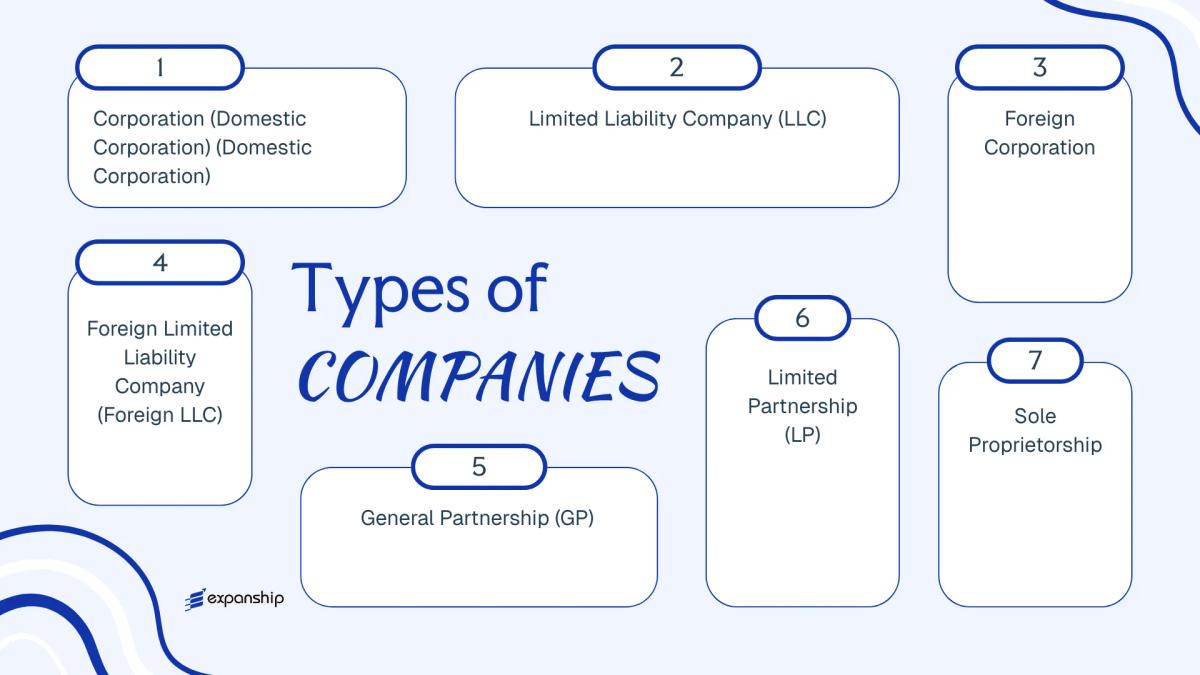
An Overview of Business Structures in Micronesia (FM)
The Federated States of Micronesia recognizes several distinct business structures under its national and state-level legal frameworks, with the primary federal legislation being the FSM Business Corporations Act. An overview of business structures in Micronesia FM reveals that available forms include domestic corporations, limited liability companies, partnerships, sole proprietorships, and foreign-registered entities. Each structure carries different implications for liability, ownership, and operational scope.
Business Structures at a Glance
| Entity Type | Legal Form | Liability | Taxed / Exempt | Local Trading | Minimum Members | Regulatory Authority | Governing Act |
|---|---|---|---|---|---|---|---|
| Domestic Corporation | Incorporated entity | Limited to share capital | Taxable | Yes | 1 director, 1 shareholder | FSM Dept. of Justice / State Gov. | FSM Business Corporations Act |
| Limited Liability Company (LLC) | Hybrid entity | Members limited | Taxable | Yes | 1 member | FSM Dept. of Justice / State Gov. | State LLC statutes |
| Foreign Corporation | Registered branch | Limited (parent liable) | Taxable on local income | Yes (registered) | 1 registered agent | FSM Dept. of Justice / State Gov. | FSM Business Corporations Act |
| Foreign LLC | Registered foreign entity | Limited (parent liable) | Taxable on local income | Yes (registered) | 1 registered agent | State Gov. | State LLC statutes |
| General Partnership | Unincorporated | Unlimited, joint | Taxable (pass-through) | Yes | 2 partners | State Gov. | General common law / state rules |
| Limited Partnership | Unincorporated | Mixed (GP unlimited) | Taxable (pass-through) | Yes | 1 GP + 1 LP | State Gov. | State partnership statutes |
| Sole Proprietorship | Unincorporated | Unlimited personal | Taxable | Yes | 1 individual | State Gov. | State business registration rules |
Each of these structures is examined in full in the sections below.
Corporation (Domestic Corporation)
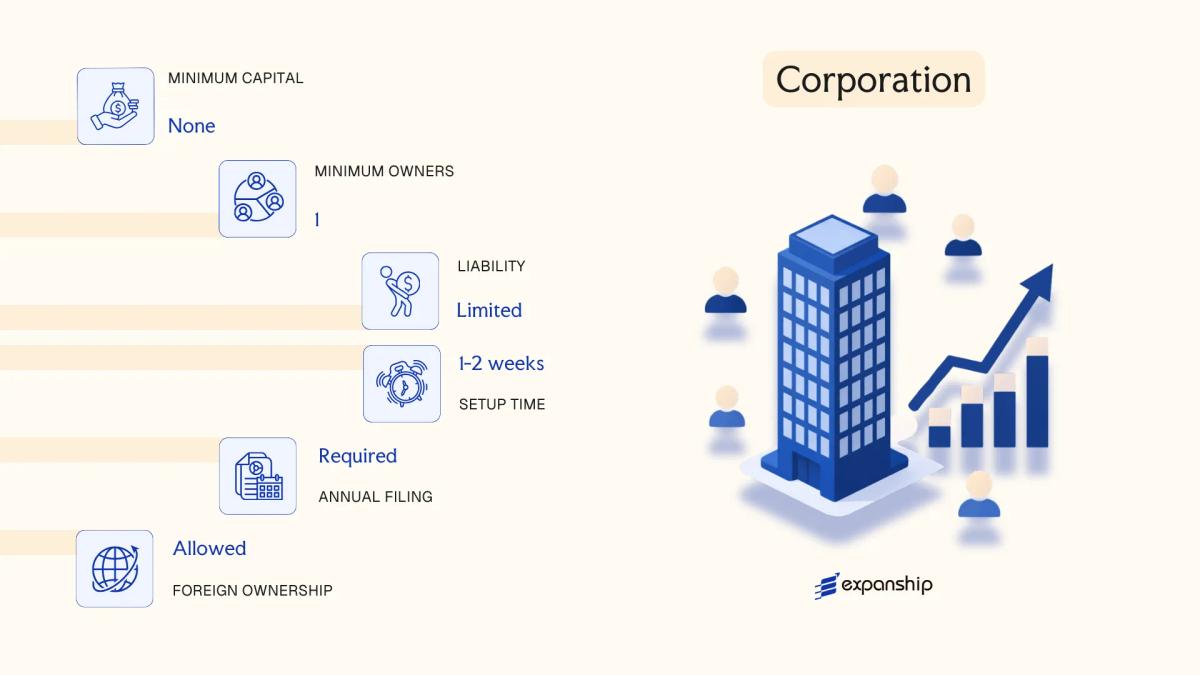
Domestic corporation registration in Micronesia is governed by the Business Corporations Act of the Federated States of Micronesia, enacted under national law. A corporation formed under this legislation carries separate legal personality, meaning the entity holds rights and obligations distinct from its shareholders, who benefit from limited liability protection.
Registration is administered at the national level through the FSM Department of Justice, which maintains the corporate registry for business entities incorporated under federal law. Individual FSM states may impose additional licensing requirements depending on where the business operates.
Key Characteristics
| Requirement | Detail | Notes |
|---|---|---|
| Legal Form | Domestic Corporation | Separate legal personality; limited liability for shareholders |
| Members | Shareholders, Directors, Officers | Minimum 1 shareholder; no statutory maximum; minimum 1 director |
| Local Presence | Registered Agent required | Registered office must be maintained within the FSM |
| Capital | USD; no statutory minimum paid-up capital | Authorized capital declared at incorporation |
| Privacy | Shareholder details generally on public record | Beneficial ownership transparency requirements apply |
Focus Points
- Taxation: The FSM imposes a gross revenue tax rather than a corporate income tax; no VAT or GST applies nationally, though import duties and state-level taxes may apply.
- Annual Compliance: Corporations must file annual reports and maintain a registered agent; failure to comply may result in administrative dissolution.
- Economic Substance: No formal economic substance regime exists at the federal level, though local operational licensing may require physical presence.
- Treaty Access: The FSM has limited double tax treaty coverage; businesses should not assume treaty benefits without specific legal verification.
- Conversion: Conversion to other entity forms, such as an LLC, is generally permissible under FSM corporate law, subject to procedural requirements.
Closing
A domestic corporation is suited to trading operations, holding structures, and businesses seeking external investment due to its familiar share-based structure. The entity's clear liability separation is an advantage for multi-party ventures, though the relatively thin treaty network limits its appeal for cross-border tax planning.
Businesses seeking a formally structured entity with share capital — particularly those planning to bring in investors or operate across multiple FSM states.

Company Incorporation in Micronesia (FSM)
Incorporate a domestic corporation in the Federated States of Micronesia with Expanship's end-to-end registration support.
Limited Liability Company (LLC)
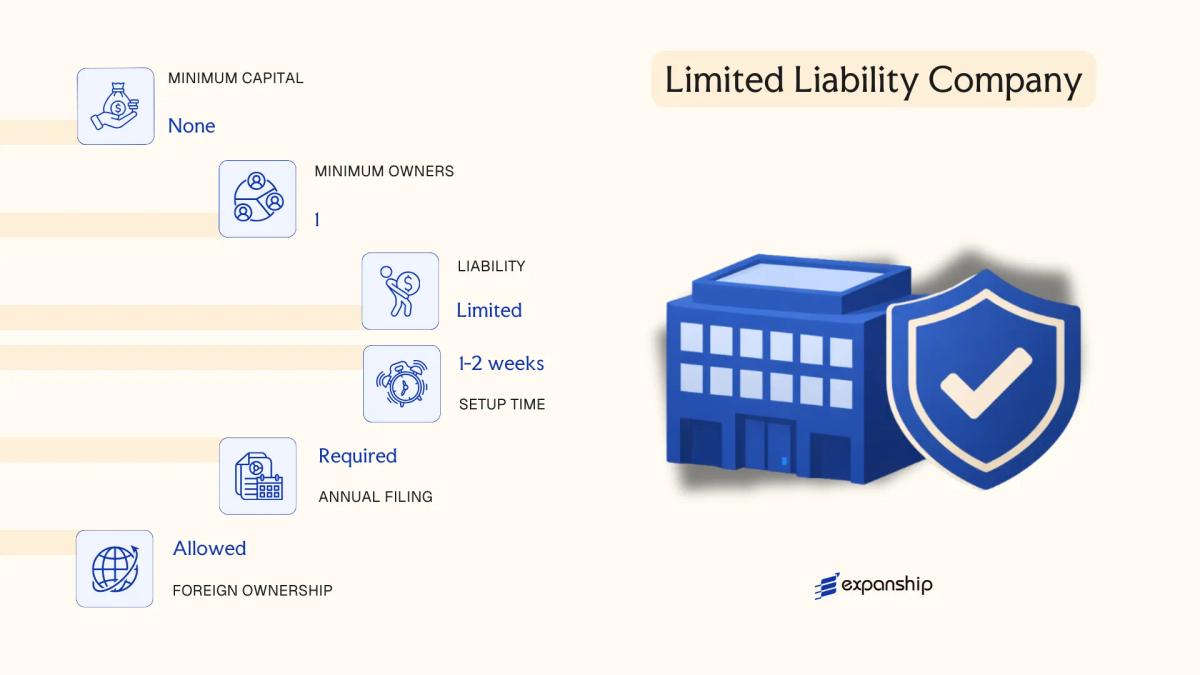
LLC formation in Micronesia FM is governed by the Federated States of Micronesia Business Corporation Act, which extends LLC provisions through national and state-level statutes. The entity carries separate legal personality, meaning the company's liabilities do not pass to its members under ordinary circumstances.
Each of the four FSM states — Chuuk, Pohnpei, Kosrae, and Yap — may impose additional registration requirements alongside national-level filing with the FSM Department of Justice or equivalent state registry.
Key Characteristics
| Requirement | Detail | Notes |
|---|---|---|
| Legal Form | Limited Liability Company | Hybrid structure combining corporate liability protection with partnership-style flexibility |
| Members | Referred to as Members; minimum 1, no statutory maximum | Single-member LLCs are permitted |
| Management | Member-managed or Manager-managed | Managers need not be members |
| Local Presence | Registered Agent required within FSM | Physical office address in the applicable state is generally required |
| Capital | USD; no prescribed statutory minimum | Contributions may be in cash, property, or services |
| Privacy | Member names filed with registry | Not fully private; public record at registration |
Focus Points
- Taxation: FSM does not impose a federal corporate income tax; gross revenue tax applies at the state level, and no VAT or withholding tax regime currently exists at the national level.
- Annual Compliance: Annual reports and renewal fees are due to the relevant state registry; failure to file can result in administrative dissolution.
- Economic Substance: No formal economic substance legislation is currently in force in FSM.
- Restrictions: Foreign ownership is permitted, though certain business activities may require additional licensing or are restricted under FSM investment laws.
- Conversion: Conversion from LLC to corporation is generally permissible under FSM business statutes, subject to registry approval.
Closing
An FSM LLC suits holding structures, small trading operations, and service businesses where pass-through tax treatment and liability separation are both required. The absence of a minimum capital requirement lowers the formation threshold, though the multi-state registry system can complicate compliance for businesses operating across more than one FSM state.
Entrepreneurs and small-to-mid-sized businesses seeking a flexible, liability-protected structure for operations primarily within one FSM state.
Foreign Business Structures [Foreign Corporation, Foreign LLC]
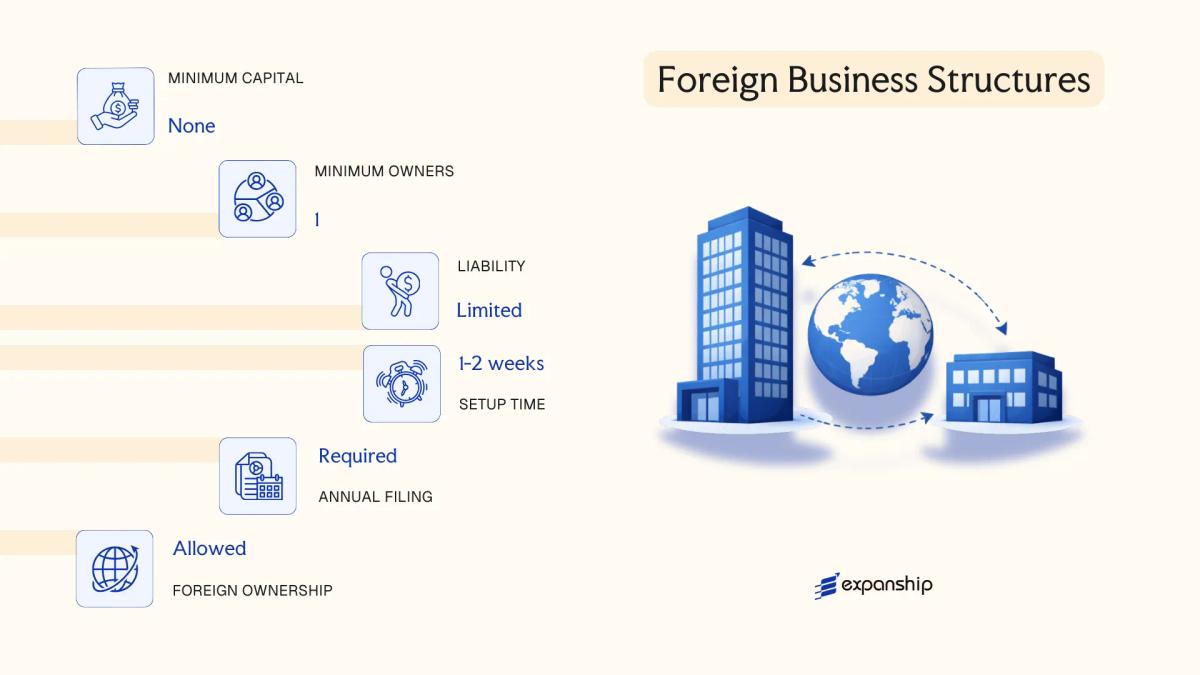
Foreign corporations and foreign LLCs seeking to operate in the Federated States of Micronesia must register with the Department of Justice under the Business Corporation Act of 1990. Registration does not create a new legal entity — the foreign firm retains its original legal personality, liability structure, and governance framework from its home jurisdiction.
Foreign corporation registration Micronesia FM requires the business to formally qualify before conducting activities within the country. Until qualification is complete, the entity cannot enforce contracts through local courts.
Key Characteristics
| Requirement | Detail | Notes |
|---|---|---|
| Legal Form | Foreign corporation or foreign LLC, as originally constituted | Retains home-jurisdiction structure |
| Members / Officers | Directors and shareholders (foreign corporation); Members or managers (foreign LLC) | No prescribed minimum beyond home-jurisdiction requirements |
| Local Presence | Registered agent with a physical address in FSM is mandatory | Registered office address required for service of process |
| Capital | No separate local minimum capital requirement | Home-jurisdiction capital structure applies |
| Filing Documents | Certified copy of articles of incorporation/organization, certificate of good standing | Documents may require apostille or consular authentication |
| Privacy | Officer and director details submitted to Department of Justice | Public register access is limited but disclosure to authorities applies |
Focus Points
- Taxation: FSM does not impose a corporate income tax at the national level; gross revenue taxes apply at the state level, and no VAT or withholding tax on dividends currently exists at the national tier.
- Annual Compliance: Annual reports must be filed with the Department of Justice to maintain good standing; failure results in administrative revocation of the qualification to do business.
- Economic Substance: No formal economic substance legislation currently mirrors the standards seen in other Pacific jurisdictions, though this position may evolve.
- Treaty Access: FSM has limited bilateral tax treaty coverage, which affects withholding tax planning for cross-border payments.
- Restrictions: Certain sectors — including fishing rights and land-related activities — are subject to constitutional restrictions that limit foreign business participation regardless of registration status.
Sub-Types
Foreign Corporation
A foreign corporation is a company incorporated outside FSM that registers to conduct business within the country. It is the most commonly used structure for multinational firms establishing a branch-equivalent presence.
Foreign LLC
A foreign LLC follows the same qualification process but retains its members-and-managers governance model from its home jurisdiction. This structure is typically preferred by operators from U.S. states where LLCs are the default business vehicle.
Closing
Registering a foreign business entity in the Federated States of Micronesia suits firms that need a legal footprint for trade, services, or project execution without incorporating a new domestic entity. The primary advantage is the preservation of the existing corporate structure; the principal drawback is exposure to state-level gross revenue taxes, which vary across Chuuk, Pohnpei, Kosrae, and Yap and require separate compliance tracking.
Foreign corporations and foreign LLCs are best suited for established international businesses entering FSM for defined commercial activities rather than long-term structural or holding arrangements.
Partnerships [General Partnership, Limited Partnership]
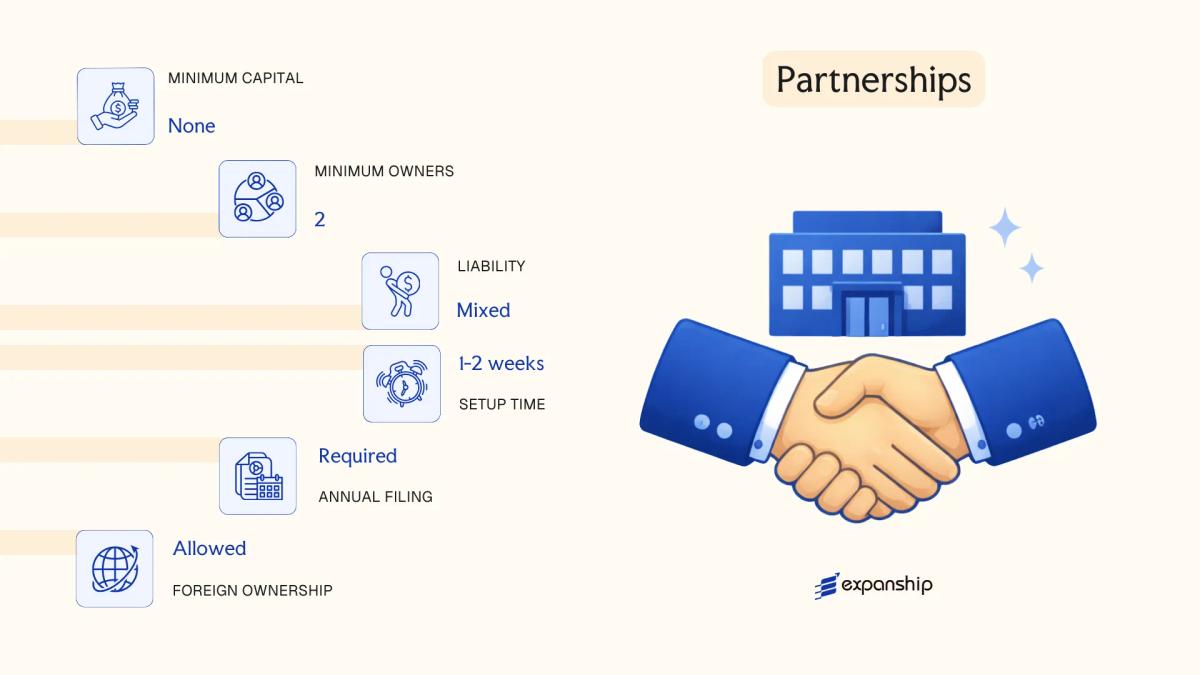
Partnership structures in Micronesia FM are governed by the Business Corporations Act and related commercial statutes administered under the FSM national and state-level legal frameworks. A general partnership does not confer separate legal personality distinct from its partners, meaning each partner bears unlimited joint and several liability for the firm's obligations.
Registration requirements vary depending on whether the business operates at the national or state level. The Division of Business Development within the relevant state government typically processes partnership registrations, and foreign nationals forming a partnership may face additional scrutiny under FSM investment laws.
Key Characteristics
| Requirement | Detail | Notes |
|---|---|---|
| Legal Form | General Partnership (GP) / Limited Partnership (LP) | GP has no separate legal personality; LP may have limited liability for passive partners |
| Members | Partners (general or limited) | GP: minimum 2, no statutory maximum; LP: at least 1 general + 1 limited partner |
| Liability | GP: unlimited for all partners; LP: limited partners capped at capital contribution | General partners in an LP retain full personal liability |
| Local Presence | Registered address within the applicable FSM state | State-level registration required |
| Capital | No statutory minimum; USD is the functional currency | Contributions defined by partnership agreement |
| Privacy | Partner names generally appear in public registration filings | No formal confidentiality mechanism under standard rules |
Focus Points
- Taxation: FSM imposes a gross revenue tax rather than a corporate income tax; partnerships pass income through to partners, who are subject to individual-level tax obligations, with no VAT or capital gains tax currently in force.
- Annual Compliance: Annual renewal filings are required at the state level to maintain active status.
- Treaty Access: FSM has a limited tax treaty network, which may restrict partners' ability to claim reduced withholding rates on cross-border distributions.
- Conversion: Conversion from a partnership to a corporation is possible under FSM commercial law, though the procedural pathway requires state authority approval.
- Restrictions: Non-citizen partners may require Foreign Investment Permit approval depending on the sector and state jurisdiction.
Sub-Types
General Partnership
All partners share management authority and carry unlimited personal liability. This structure suits small, domestically focused ventures where partners have equal operational involvement.
Limited Partnership
At least one general partner manages the business and holds unlimited liability, while limited partners contribute capital without active management. This arrangement is commonly used for investment vehicles or joint ventures where passive investors participate without operational exposure.
Closing
Partnerships are most appropriate for smaller joint ventures or locally operating businesses where formal corporate structure is not required, with the primary advantage being straightforward formation and minimal statutory capital requirements. The significant drawback for general partnerships is the absence of liability protection, which exposes partners' personal assets to business creditors.
This structure is best suited for small-scale domestic operators or two-party joint ventures where both partners are active in management and comfortable with shared personal liability.
Sole Proprietorship
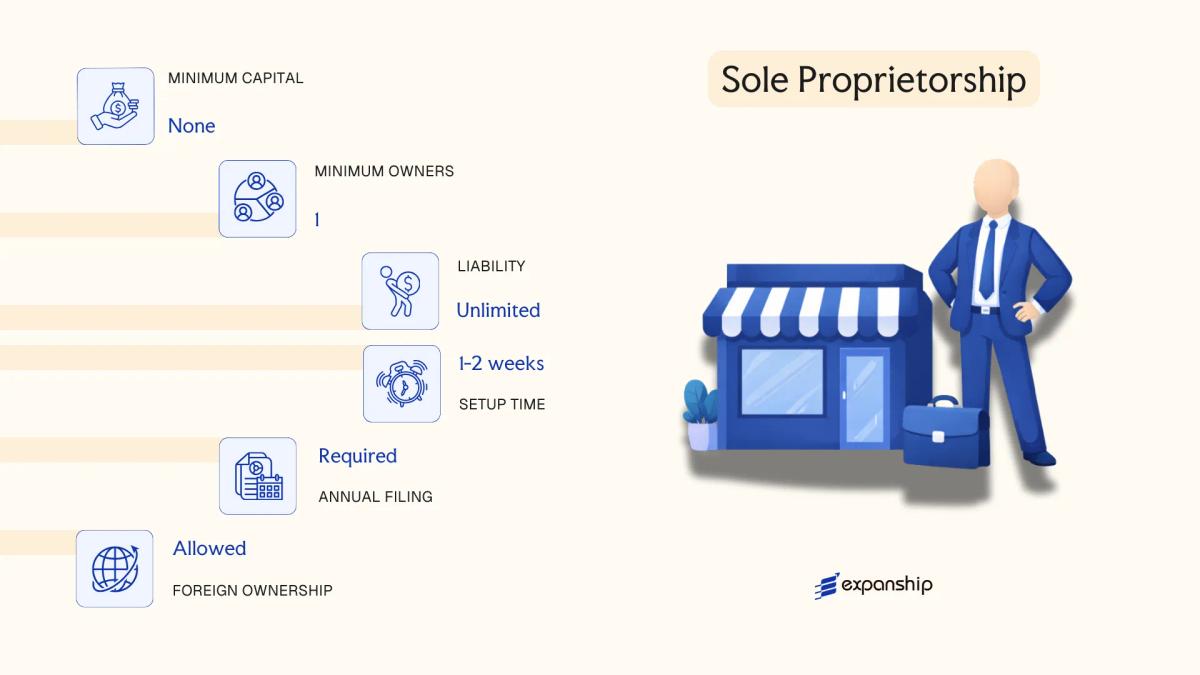
A sole proprietorship Micronesia FM setup operates under the general business registration framework administered by the FSM Department of Finance and Administration, with additional licensing requirements falling under the jurisdiction of the relevant State Government (Pohnpei, Chuuk, Yap, or Kosrae). This structure carries no separate legal personality — the proprietor and the business are treated as one and the same under FSM law, meaning personal assets remain exposed to business liabilities.
Registration typically involves obtaining a business license at the state level rather than through a distinct federal incorporation process. Because Micronesia FM individual business registration is handled state by state, requirements and fees vary across the four states.
Key Characteristics
| Requirement | Detail | Notes |
|---|---|---|
| Legal Form | Unincorporated individual business | No separate legal personality from the owner |
| Members | Single proprietor | No partners, directors, or shareholders |
| Local Presence | State-level business license; physical address required | Requirements differ by state |
| Capital | No statutory minimum; FSM Dollar (USD) | USD is the official currency of the FSM |
| Privacy | Owner name typically appears on public license records | Limited privacy protection |
Focus Points
- Taxation: No corporate income tax applies; business income is reported as personal income under the FSM Gross Revenue Tax framework, which also applies a gross revenue tax on business receipts; no VAT or GST exists at the federal level.
- Annual Compliance: Business license renewal required annually at the state level; no separate annual filing with a federal corporate registry.
- Economic Substance: No formal economic substance obligations apply to sole proprietorships under current FSM law.
- Treaty Access: As an unincorporated structure, access to tax treaty benefits is extremely limited.
- Conversion: Converting to a corporation or LLC requires a fresh registration process; there is no statutory conversion mechanism.
Sole proprietorships suit resident individuals conducting small-scale local trade or services. The primary advantage is minimal administrative overhead and low setup cost; the significant drawback is unlimited personal liability, which exposes the proprietor's personal assets to any business debt or legal claim.
Resident individuals operating a small, locally focused business with limited liability exposure and no plans for external investment or multi-owner expansion.
How to Choose the Right Entity Type in Micronesia (FM)
Choosing the right business entity in Micronesia FM has direct legal and financial consequences — not abstract ones.
Why Your Entity Choice Matters
The structure you register shapes your obligations from day one. Selecting the wrong one creates concrete problems:
- Registering a foreign corporation when your business will transact locally with FSM residents means operating outside the scope of that registration, which can result in penalties or administrative dissolution under the FSM Business Corporations Act.
- Choosing a tax-exempt entity when you require access to double taxation agreements may disqualify your firm from claiming withholding tax reductions in counterpart jurisdictions.
- Forming a corporation when a partnership or sole proprietorship structure is sufficient for a single-operator consultancy introduces annual compliance obligations — including reporting to the Department of Finance — that would not otherwise apply.
- Selecting a structure without verifying its eligibility under FSM state-level licensing requirements can result in operating without valid authorization, since business regulation in the Federated States operates at both federal and state levels.
Key Factors to Consider
- Business Activity: Passive asset-holding, active trading, and regulated sectors each require distinct structures under FSM law.
- Local vs. Offshore Operations: Transacting with FSM residents triggers local registration requirements that purely offshore operations may not.
- Ownership and Management: Multi-party ventures requiring formal governance point toward a corporation, while single-owner operations may suit an LLC or sole proprietorship.
- Tax Objectives: FSM imposes a gross revenue tax rather than a corporate income tax, so your entity choice affects which tax base and rate applies to your business.
- Exit Strategy: Not all FSM-registered entities permit redomiciliation or conversion; confirm these options before formation if future structural changes are anticipated.
The FSM Business Corporations Act governs domestic corporations and sets the baseline for formation and compliance requirements.
Compliance Services for Companies in the Federated States of Micronesia
Maintain your FSM-registered entity in good standing with ongoing compliance support covering annual reporting, state-level licensing, and regulatory filings.
Conclusion
A Micronesia FM company formation summary comes down to matching your operational goals against what each structure actually permits under FSM law. Domestic corporations suit businesses seeking perpetual existence and transferable shareholding under the FSM Business Corporations Act. The LLC offers pass-through taxation with limited liability, making it the preferred choice for smaller ventures or joint operations. Foreign corporations and foreign LLCs allow existing entities to extend their activities into the jurisdiction without forming a separate local company. General and limited partnerships serve co-owned businesses where partners accept varying degrees of liability exposure. Sole proprietorships remain straightforward but carry unlimited personal liability.
Domestic corporations represent the most commonly registered structure for formal commercial activity. Regulatory updates and bilateral engagement suggest the FSM is gradually aligning its business environment with broader Pacific economic frameworks, which may affect future compliance obligations for your firm.
How Expanship Can Assist You
Expanship company registration Micronesia FM covers the full process, from selecting the appropriate entity under the FSM Business Corporation Act or forming an LLC, through to satisfying filing obligations with the Department of Revenue and Taxation in each relevant state. Each structure discussed in this blog carries distinct compliance requirements, and getting the foundations right matters.
Our corporate services for the Federated States of Micronesia include:
- Document preparation and notarization or legalization
- Registered agent and registered office provision
- Government filing and liaison with the relevant state registry
- Post-incorporation compliance management, including annual reporting
- Banking introduction assistance for newly formed entities
Expanship Micronesia business formation support is available across all four FSM states: Chuuk, Pohnpei, Kosrae, and Yap. Each has its own registration procedures, so local knowledge directly affects how quickly your business becomes operational.
To discuss your specific situation, contact Expanship FM directly.
Frequently Asked Questions (FAQ)
The domestic corporation is the most frequently formed entity, primarily because it offers shareholders limited liability while accommodating both resident and foreign ownership. Its established statutory framework under FSM corporate law makes it the default choice for structured commercial activity.
A foreign corporation is one incorporated outside FSM that registers to conduct business within the jurisdiction, whereas a domestic corporation is formed directly under FSM law. Foreign corporations retain their original legal identity and tax obligations from their home jurisdiction, while domestic corporations are subject to FSM's local tax and compliance requirements. Local trading rights are available to both, though foreign corporations must maintain a registered agent and comply with FSM's foreign registration requirements.
Among available structures, corporations offer the most practical privacy, as shareholder information is not routinely disclosed in public filings. Nominee director and shareholder arrangements are permissible, subject to applicable beneficial ownership disclosure obligations.
A sole proprietorship and an LLC can each be formed by one person. Partnerships, by definition, require a minimum of two partners, so a single individual cannot form a general or limited partnership alone.
Foreign nationals may register a domestic corporation, an LLC, or establish a foreign corporation by qualifying to do business locally. Certain business activities, particularly those involving land use or specific licensed sectors, may be subject to restrictions under FSM national or state-level law, so sector-specific rules should be verified before proceeding.
FSM law permits structural reorganisation, though the specific conversion procedures depend on the entity types involved. A corporation may generally be restructured, but converting between fundamentally different forms, such as from a partnership to a corporation, typically requires dissolution of the original entity and formation of a new one. Legal counsel familiar with FSM corporate statutes should be engaged to confirm the applicable process.
Corporations and LLCs possess separate legal personality, meaning they can contract, hold assets, and incur liabilities independently of their owners. General partnerships and sole proprietorships do not carry this separation, leaving owners personally exposed to business obligations.
Legal Disclaimer
The information provided in this article is for general informational purposes only and does not constitute legal, tax, or professional advice. While we strive to ensure the accuracy and timeliness of the content, laws and regulations are subject to change, and the application of laws can vary widely based on specific facts and circumstances.
Readers should not act upon this information without seeking professional counsel tailored to their individual situation. Expanship and its authors disclaim any liability for actions taken or not taken based on the content of this article.
For specific advice regarding your business setup, compliance requirements, or any legal matters, please consult with qualified legal and tax professionals in the relevant jurisdiction.