

Key Takeaways
- All companies incorporated in Martinique must register through the Greffe du Tribunal de Commerce under the Code de commerce, as French commercial law applies directly to this overseas department without a separate territorial legal framework.
- Société par Actions Simplifiée structures benefit from no statutory minimum share capital requirement, whereas a Société Anonyme must meet a defined capital threshold before registration can proceed.
- Beneficial ownership information must be disclosed to France's register of beneficial owners at the point of incorporation and updated whenever the underlying ownership structure changes, creating a continuous compliance obligation beyond initial filing.
- The legal form selected — whether an SARL, SAS, SA, or another structure — directly determines which capital, directorship, and shareholder rules apply, making entity selection a foundational compliance decision rather than a purely commercial one.
Martinique operates as an overseas region and department of France, meaning entity formation is governed by French commercial law rather than a separate territorial legal framework. The applicable legislation is the Code de commerce, and business registration is administered through the Centre de Formalités des Entreprises (CFE) and the Greffe du Tribunal de Commerce.
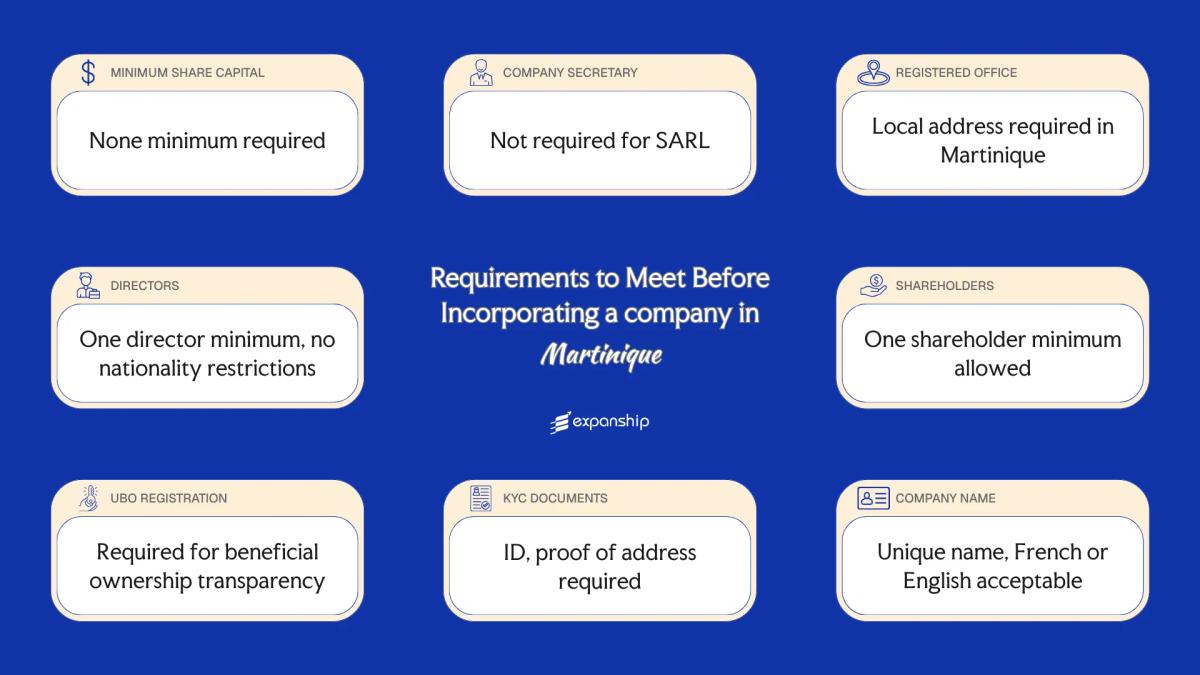
Meeting the incorporation requirements in Martinique spans several distinct categories, from capital thresholds and directorship rules to registered office obligations and beneficial ownership disclosure.
Failure to satisfy these requirements results in rejection of the registration application or, in cases of post-incorporation non-compliance, exposure to civil and administrative penalties under French law.
Requirements vary depending on the legal form selected, whether a Société à Responsabilité Limitée, Société par Actions Simplifiée, or another structure, as well as the sector in which your business intends to operate.
This article is most relevant to foreign investors and non-resident business owners evaluating Martinique business setup requirements before committing to a specific entity structure.
Minimum Share Capital Requirements in Martinique
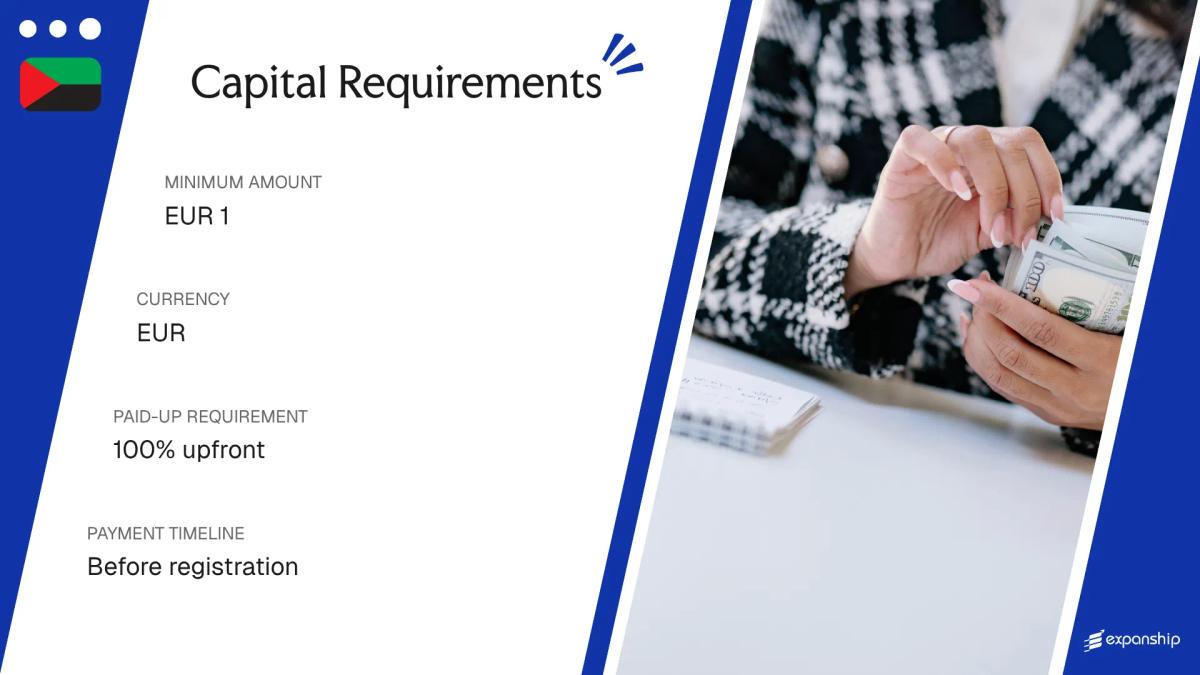
As an overseas territory of France, Martinique share capital requirements follow French corporate law under the Code de Commerce. The Greffe du Tribunal de Commerce handles the registration process and verifies submitted capital documentation at the point of incorporation.
For a SARL, no statutory minimum applies since French law reduced the requirement to one euro symbolically, though a realistic authorized capital structure must still be declared. An SAS operates under similar flexibility, with founders determining the share capital amount in the company's statutes.
| Parameter | Detail |
|---|---|
| Minimum Authorized Share Capital | No statutory minimum (1 EUR symbolic minimum under French law) |
| Maximum Authorized Share Capital | No statutory maximum |
| Minimum Paid-Up Capital | No statutory minimum |
| Paid-Up Requirement at Incorporation | Capital must be deposited before registration is finalized |
| Accepted Currency | Euro (EUR) |
| Accepted Forms of Contribution | Cash contributions; in-kind contributions subject to valuation |
| Timeframe to Deposit Capital | Prior to filing with the Greffe du Tribunal de Commerce |
Capital must be deposited into a blocked account before the registration dossier is submitted. The Greffe releases the funds only after the entity is formally registered, meaning your capital remains inaccessible during the incorporation window.
Company Secretary Requirements in Martinique
Martinique, as an overseas territory of France, follows French corporate law. There is no standalone "company secretary" role under French commercial law — the concept does not map directly onto the French system as it does in common law jurisdictions.
Under French-derived rules applicable in Martinique, corporate governance obligations are fulfilled by the company's statutory officers rather than a separate secretary. For a Société à Responsabilité Limitée, the gérant holds administrative responsibility, while a Société Anonyme distributes governance duties between the directoire and conseil de surveillance or conseil d'administration.
Qualification criteria for those fulfilling statutory governance and compliance functions include:
- Natural persons must have full legal capacity under French civil law.
- Corporate entities may serve as gérant in certain structures, subject to conditions set by the associés.
- No formal licensing or professional certification is required to act as a statutory officer.
- Residency within Martinique or France is not mandated for statutory officers under general French commercial rules.
- Persons subject to a court-issued ban on directing commercial entities (interdiction de gérer) are disqualified.

Incorporate a Company in Martinique
Set up your business entity in Martinique under French commercial law with structured guidance on statutory requirements and registration procedures.
Registered Office Requirements in Martinique
Registered office requirements in Martinique follow French metropolitan law, as the territory is an integral part of France and subject to the French Commercial Code (Code de commerce). Your company's siège social must be established before registration with the Registre du Commerce et des Sociétés (RCS) held at the Tribunal de Commerce de Martinique, and any address that misrepresents the actual place of business can expose the entity to administrative sanctions or nullification proceedings.
- A physical address within Martinique is required; a P.O. box alone does not satisfy the siège social requirement.
- Virtual office arrangements may be accepted if they provide a genuine, identifiable address and comply with French commercial law standards.
- The address must be locally based in Martinique; a metropolitan France address does not satisfy registration requirements for a locally incorporated entity.
- Supporting documentation, such as a lease agreement, property title, or a domiciliation contract, must be held on file to justify the declared address.
- The registered address is publicly listed in the RCS and accessible through the INPI (Institut National de la Propriété Industrielle) national registry portal.
- Any change to the siège social requires a formal modification filing with the RCS, accompanied by updated supporting documents and applicable filing fees.
Director Requirements in Martinique
Upon appointment, a gérant or director of a Martinique company assumes statutory duties under French commercial law, including obligations of loyalty, proper management, and liability for any fault committed in the course of their functions that causes harm to the company or third parties.
| Parameter | Detail |
|---|---|
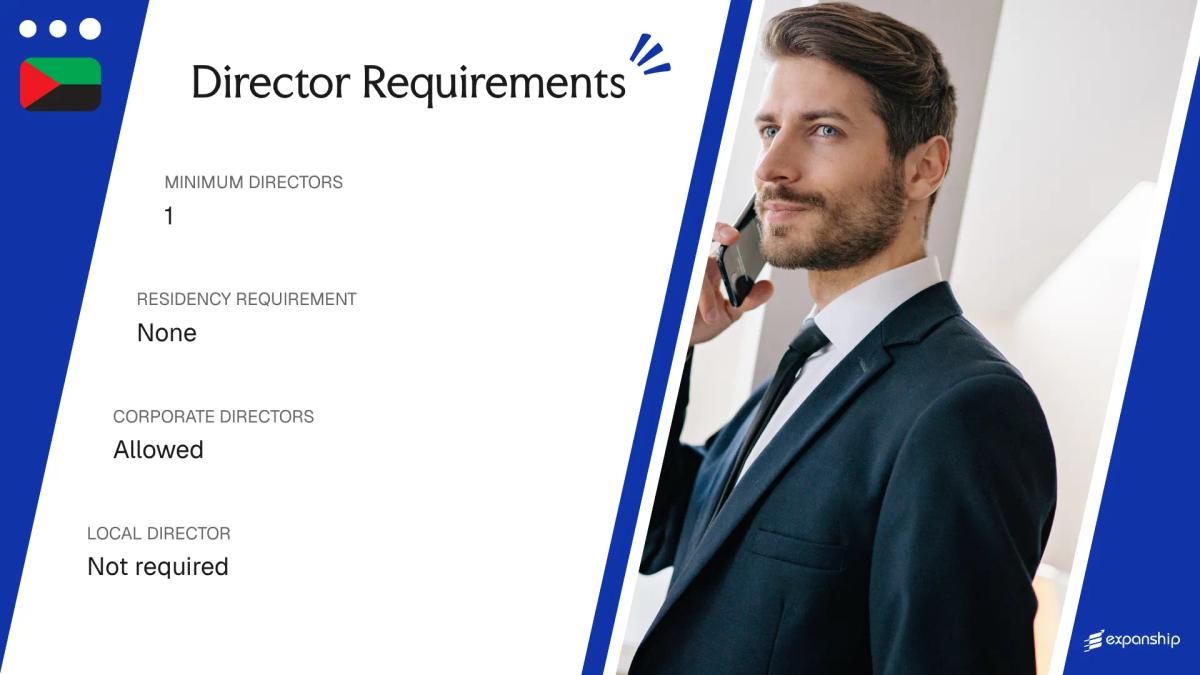
| Minimum Number of Directors | One gérant or director is required for most entity types, including the SARL and SAS. |
| Maximum Number of Directors | No statutory maximum applies to directors in an SAS; the SARL is managed by one or more gérants without a fixed upper limit. |
| Local/Resident Director Required | No statutory requirement for a locally resident director exists under French commercial law as applied in Martinique. |
| Nationality Restrictions | No nationality restrictions apply, though non-EU nationals managing a commercial entity must hold a valid titre de séjour autorisant l'exercice d'une activité commerciale. |
| Minimum Age Requirement | Directors must be at least 18 years of age and legally capable under civil law. |
| Corporate Directors Permitted | Corporate directors are permitted in an SAS but are generally not permitted to act as gérant in a SARL. |
| Director Must Be a Shareholder | No statutory requirement obliges a director to hold shares in the company. |
| Publicly Listed on Registry | Directors are listed on the Registre du Commerce et des Sociétés (RCS) held at the Tribunal de Commerce. |
| Disqualification Conditions | A person subject to a faillite personnelle, interdiction de gérer, or criminal conviction involving financial misconduct may be disqualified from acting as director. |
Despite Martinique being an overseas territory with distinct economic conditions, its director liability framework follows metropolitan French law in full, meaning a gérant of a local SARL can be held personally liable for social debts of the company if mismanagement is established.
Shareholder Requirements in Martinique
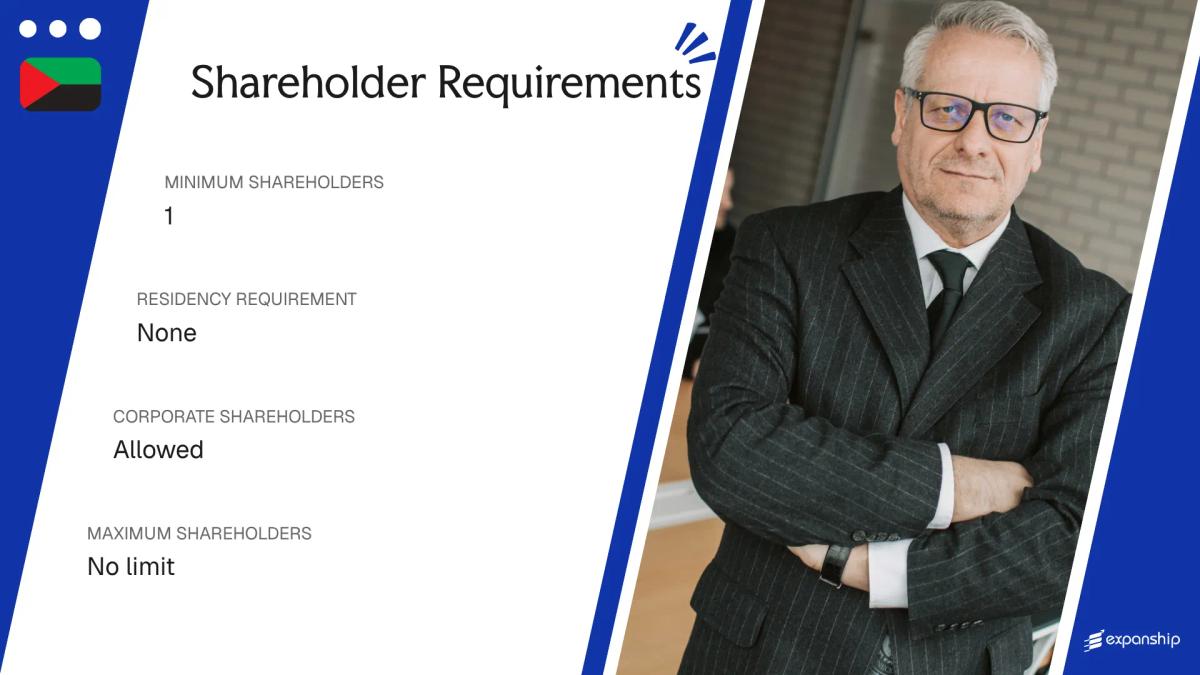
Shareholder requirements in Martinique follow the legal framework applicable in metropolitan France, as the territory operates under French law. A Société à Responsabilité Limitée (SARL) requires between one and one hundred associés, with the single-shareholder variant known as an Entreprise Unipersonnelle à Responsabilité Limitée (EURL). A Société par Actions Simplifiée (SAS) may also be formed with a sole shareholder, structured as a SASU.
Nationality and Residency Restrictions
No nationality or residency requirement applies to shareholders. Foreign individuals and entities may hold equity without restriction on ownership percentage.
Corporate Shareholders
Corporate entities are permitted as shareholders across all principal company forms. No additional licensing or local presence is required of a corporate associé.
Shareholder Liability
Liability is limited to each associé's capital contribution in both the SARL and SAS structures. Extended personal liability does not arise under standard conditions.
Register of Shareholders
A register of shareholders must be maintained at the company's registered office. For SAS entities, share transfers must be recorded in this register to be enforceable against third parties, though the register is not publicly accessible through the Registre du Commerce et des Sociétés.
Guidance on Shareholder Structuring for Your Martinique Entity
Get clarity on associé requirements, ownership structures, and compliance obligations when setting up a company in Martinique.
UBO / Beneficial Ownership Disclosure Requirements in Martinique
As an overseas territory of France, beneficial ownership requirements Martinique follows derive from French national law, specifically the transposition of the EU's Fourth and Fifth Anti-Money Laundering Directives into French law via the Code monétaire et financier. A beneficial owner (bénéficiaire effectif) is defined as any natural person holding, directly or indirectly, more than 25% of the capital or voting rights of a legal entity.
- At incorporation, the legal representative files a declaration identifying all beneficial owners with the Greffe du Tribunal de Commerce.
- The declaration must be submitted alongside the standard registration dossier, prior to the issuance of the Kbis extract.
- Details recorded include full name, date and place of birth, nationality, country of residence, and the nature of the controlling interest held.
- Any change in beneficial ownership must be reported to the Greffe within 30 days of the change occurring.
| Parameter | Detail |
|---|---|
| Ownership Threshold for UBO Status | Above 25% of capital or voting rights |
| Filing Authority | Greffe du Tribunal de Commerce |
| Disclosure Deadline at Incorporation | At the time of registration, before Kbis issuance |
| Publicly Accessible Register | Registre des bénéficiaires effectifs; accessible to competent authorities and persons with a legitimate interest |
| Penalties for Non-Disclosure | Criminal penalties under French law, including fines and potential imprisonment for the legal representative |
| Ongoing Update Obligation | Within 30 days of any change in beneficial ownership information |
KYC / Document Requirements in Martinique
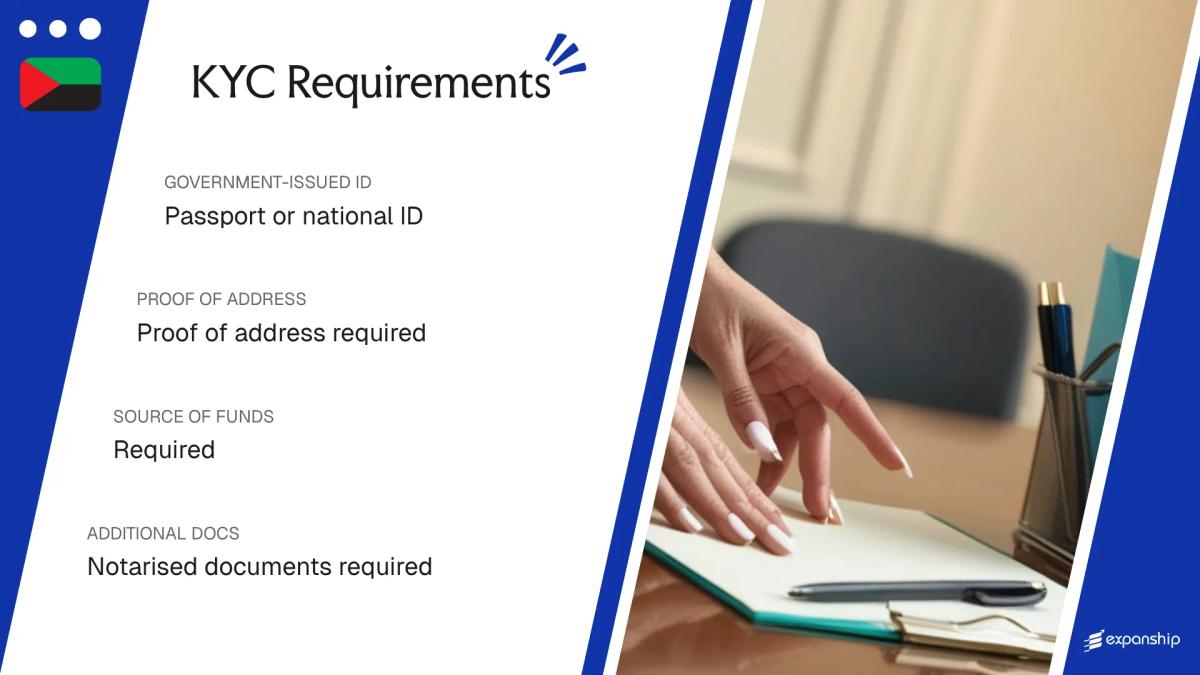
As an overseas territory of France, KYC requirements Martinique incorporation procedures fall under French AML law, specifically the transposition of EU Directive 2015/849 (AMLD4) and its successors into the French Monetary and Financial Code, with oversight exercised by TRACFIN.
Individual / Personal Documents
- Valid government-issued photo identity document (passport or national identity card)
- Proof of residential address dated within three months, such as a utility bill or bank statement
- Completed and signed KYC declaration form as required by the registering notaire or greffier
- Recent passport-sized photograph may be required depending on the registering authority
Corporate Documents
- Certificate of incorporation or equivalent constitutional document of the parent entity
- Certified copy of the entity's articles of association or statutes
- Current register of directors issued by the relevant home jurisdiction authority
- Proof of the corporate entity's registered address
Source of Funds Documentation
- Recent bank statements covering a minimum of three months prior to incorporation
- Audited financial accounts where the subscribing entity is an established business
- Written declaration of origin of funds signed by the subscriber
Notarisation and Apostille Requirements
- Foreign documents must generally be apostilled under the 1961 Hague Convention
- Official translations into French are required for all non-French language documents
- Translations must be certified by a sworn translator recognised in France
Unsigned or uncertified translations of foreign corporate documents are among the most frequent causes of registration delay at the greffe du tribunal de commerce.
Company Name Requirements in Martinique
Company name requirements in Martinique follow the same framework applied across French metropolitan law, as the territory operates under French civil and commercial code. Names are assessed at the point of registration through the Centre de Formalités des Entreprises (CFE) and must be distinguishable from existing registered entities.
Your chosen dénomination sociale must be in French or use characters compatible with French administrative standards. A legal suffix indicating the entity type is mandatory, such as SARL or SAS.
Certain terms are outright prohibited without prior authorisation, including words that imply state affiliation, banking functions, or regulated professional activities.
Name reservation is available through the relevant commercial registry prior to formal incorporation, though the reservation period and procedures follow general French territorial practice.
Compliance Services for Companies in Martinique
Keep your Martinique entity in good standing with ongoing compliance support, from annual filings to regulatory updates.
Conclusion
Martinique operates under French corporate law, meaning the incorporation requirements in Martinique mirror those applied across metropolitan France and are governed by the Code de commerce. Among the requirements covered, UBO disclosure obligations under France's beneficial ownership register carry ongoing compliance implications beyond the initial registration. Capital requirements vary by entity type, with the SAS offering greater flexibility than the SA. Once these requirements are understood, a foreign investor's attention shifts to execution: filing with the Greffe du Tribunal de Commerce and maintaining continuous regulatory compliance thereafter.
Expanship's Corporate Services for Martinique Expansion
Martinique's French legal framework means your entity will be subject to the same corporate, tax, and filing obligations that apply across metropolitan France, including RCS registration, URSSAF enrolment, and ongoing liabilities to the Direction Générale des Finances Publiques. Expanship's Martinique company formation services are structured around these specific requirements, reducing the administrative burden that comes with operating under a dual local-and-metropolitan compliance environment.
Beyond initial registration, our corporate services Martinique incorporation support covers the full operational setup your business needs:
- We prepare and file all incorporation documents with the Centre de Formalités des Entreprises and the Registre du Commerce et des Sociétés.
- A registered office address in Martinique is provided to satisfy the domiciliation requirement.
- Our team handles liaison with French regulatory authorities and local government bodies on your behalf.
- Post-incorporation compliance obligations, including annual filings, are managed on an ongoing basis.
- Banking introduction support is available to assist with opening a local or correspondent account.
- Tax registration and coordination with the Direction Générale des Finances Publiques is handled as part of the setup process.
To discuss your requirements, contact Expanship Martinique.
Frequently Asked Questions (FAQ)
The requirement depends on the legal form you choose. An SARL (Société à Responsabilité Limitée) can be formed with as little as one euro in share capital under current French law, while an SA (Société Anonyme) requires a minimum of 37,000 euros, with at least half deposited at registration.
Failure to file or update beneficial ownership information with the Registre des Bénéficiaires Effectifs can result in criminal penalties under French law, including fines and, in serious cases, imprisonment for the responsible directors. The obligation applies to all commercial entities registered in Martinique, and non-compliance is not treated as a minor administrative oversight.
Yes, French law does not impose a residency requirement on directors of an SARL or SA incorporated in Martinique. However, non-EU nationals may need to hold a valid autorisation d'exercer une activité commerciale before actively managing the business on the ground.
EU-based shareholders generally satisfy identity requirements with a national identity card or passport, while non-EU shareholders typically must provide a certified passport copy alongside additional proof of address and, in some cases, source-of-funds documentation. The registrar and any depositary bank may apply enhanced due diligence under French anti-money laundering regulations derived from EU directives transposed into the Code monétaire et financier.
A name that is already in use and registered in the Registre National des Entreprises cannot be adopted, as French law requires sufficient distinctiveness to avoid confusion with existing entities. You would need to select an alternative name, and a preliminary name availability check through the INPI (Institut National de la Propriété Industrielle) is the standard way to verify this before submitting incorporation documents.
Legal Disclaimer
The information provided in this article is for general informational purposes only and does not constitute legal, tax, or professional advice. While we strive to ensure the accuracy and timeliness of the content, laws and regulations are subject to change, and the application of laws can vary widely based on specific facts and circumstances.
Readers should not act upon this information without seeking professional counsel tailored to their individual situation. Expanship and its authors disclaim any liability for actions taken or not taken based on the content of this article.
For specific advice regarding your business setup, compliance requirements, or any legal matters, please consult with qualified legal and tax professionals in the relevant jurisdiction.