
Key Takeaways
- Mongolia's most commonly used foreign investment vehicle is the Limited Liability Company (Хязгаарлагдмал Хариуцлагатай Компани), valued for its limited liability protection and comparatively low capital requirements.
- All legal entity registrations in Mongolia fall under the jurisdiction of the State Registration General Office (SRGO), with the framework for companies governed primarily by the Law on Companies (2011, as amended).
- Branch offices and representative offices do not constitute separate legal persons under Mongolian law, making them structurally distinct from locally incorporated entities such as the LLC or Joint Stock Company.
- Your chosen entity type in Mongolia directly determines access to tax treaty benefits, profit repatriation mechanisms, and ongoing compliance obligations under Mongolian law.
Introduction to Entity Types in Mongolia
Landlocked between Russia to the north and China to the south, Mongolia is an independent sovereign nation operating under a parliamentary republic system. Registered businesses fall under the jurisdiction of the State Registration General Office (SRGO), the authority responsible for company formation and legal entity registration across the country.
Mongolia operates a territorial-based tax system with standard corporate income tax applied to locally sourced profits, and the country maintains a growing network of double taxation treaties.
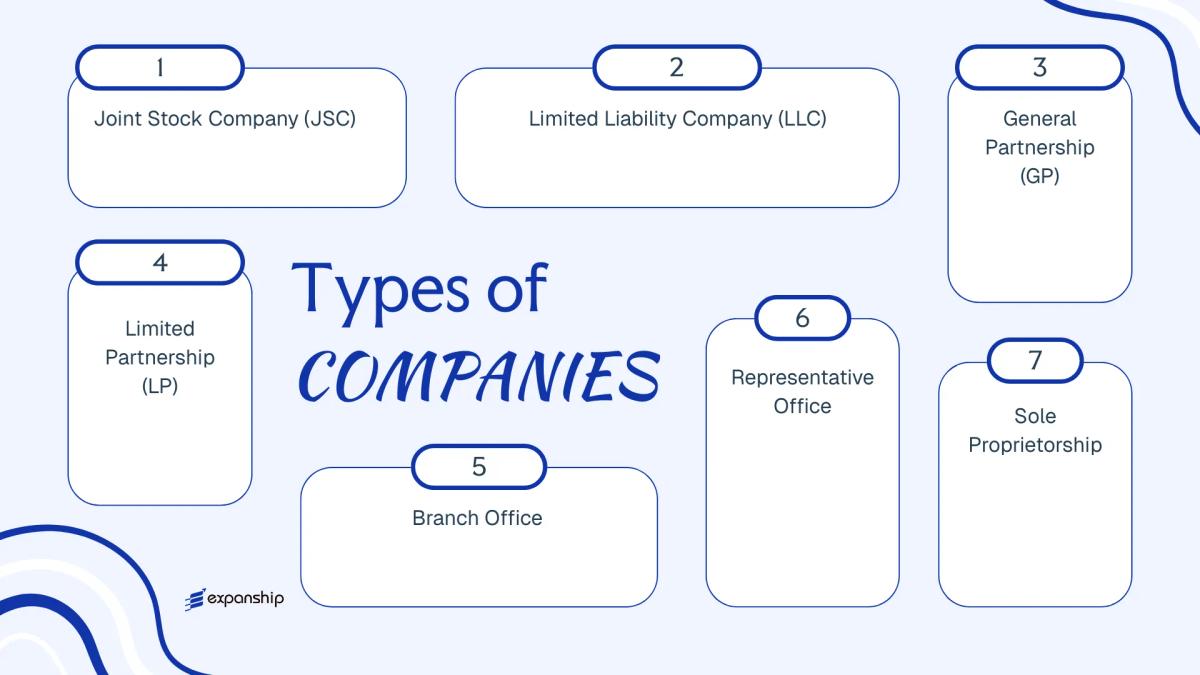
The types of business entities in Mongolia available to both domestic and foreign investors include: Joint Stock Company, Limited Liability Company, General Partnership, Limited Partnership, Branch Office, Representative Office, and Sole Proprietorship.
Each structure carries distinct requirements around share capital, liability, ownership, and regulatory obligations. This article examines each legal entity type in detail — covering formation requirements, governance rules, and the practical considerations relevant to your business objectives.
An Overview of Business Structures in Mongolia
Mongolian corporate law provides five principal business structures available to resident and foreign investors under the Company Law of Mongolia (2011, as amended). The Registration Authority for Legal Entities under the General Authority for State Registration (GASR) administers entity formation and ongoing compliance. Each structure carries distinct implications for liability, ownership, and permitted commercial activity.
Business Structures at a Glance
| Entity Type | Legal Form | Liability | Tax Status | Local Trading | Minimum Members | Regulatory Authority | Governing Act |
|---|---|---|---|---|---|---|---|
| Joint Stock Company | Incorporated company | Limited to share value | Taxable | Permitted | 1 shareholder | GASR | Company Law 2011 |
| Limited Liability Company | Incorporated company | Limited to contribution | Taxable | Permitted | 1 member | GASR | Company Law 2011 |
| General Partnership | Unincorporated entity | Unlimited, joint | Taxable | Permitted | 2 partners | GASR | Civil Code of Mongolia |
| Limited Partnership | Unincorporated entity | Mixed (general/limited) | Taxable | Permitted | 2 partners | GASR | Civil Code of Mongolia |
| Branch Office | Foreign entity extension | Parent bears liability | Taxable | Permitted | N/A | GASR / FIFTA | Law on Foreign Investment |
| Representative Office | Non-trading foreign entity | Parent bears liability | Generally exempt | Not permitted | N/A | GASR / FIFTA | Law on Foreign Investment |
| Sole Proprietorship | Individual trader | Unlimited, personal | Taxable | Permitted | 1 individual | GASR | Law on Business Entities |
Each of these structures is examined in full in the sections below.
Joint Stock Company (Хувьцаат Компани)
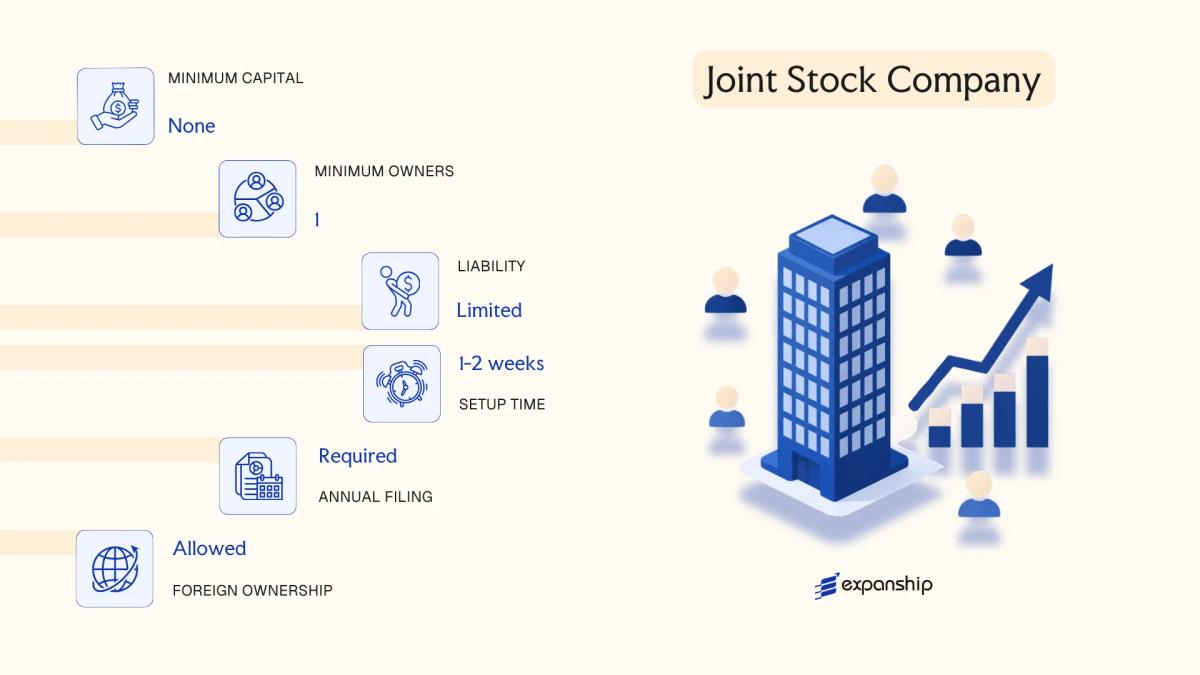
Governed by the Law on Companies of Mongolia (2011, as amended), a Mongolia Joint Stock Company (Хувьцаат Компани) is a separate legal entity with limited liability for its shareholders. Shares are the unit of ownership, and the company's obligations do not extend to shareholders' personal assets beyond their capital contribution.
Хувьцаат Компани formation suits businesses intending to raise capital from a wider pool of investors or list publicly. JSC formation in Mongolia requires registration with the Legal Entities Registration Office (LERO) and, for open JSCs, additional regulation by the Financial Regulatory Commission (FRC).
Key Characteristics
| Requirement | Detail | Notes |
|---|---|---|
| Legal Form | Joint Stock Company (JSC) | Separate legal personality; limited liability |
| Members | Shareholders; Board of Directors; Executive Officer | Minimum 1 shareholder; no statutory maximum |
| Local Presence | Registered address in Mongolia | No mandatory resident director, but a local registered address is required |
| Capital | MNT; minimum capital varies by sub-type (open JSC requires higher paid-in capital) | Shares must be registered with the FRC for public JSCs |
| Privacy | Shareholder register is maintained; open JSCs have public disclosure obligations | Closed JSCs afford relatively more privacy |
Focus Points
- Taxation: Subject to a 10% corporate income tax on profits; 10% VAT applies to taxable supplies; dividend withholding tax is generally 10%; Mongolia's tax authority (MTA) administers these obligations.
- Annual Compliance: Annual financial statements, shareholder meetings, and filing with LERO are mandatory; open JSCs face additional FRC reporting.
- Treaty Access: Mongolia has concluded a network of double tax treaties, which a JSC can access subject to beneficial ownership requirements.
- Conversion: A JSC may convert to a limited liability company through a formal reorganisation procedure under the Law on Companies.
Sub-Types
Open Joint Stock Company (Нээлттэй Хувьцаат Компани)
Shares may be publicly offered and traded on the Mongolian Stock Exchange; the entity falls under FRC supervision and faces stricter disclosure, reporting, and minimum capital requirements than a closed JSC.
Closed Joint Stock Company (Хаалттай Хувьцаат Компани)
Share transfers are restricted and not offered to the general public, making this sub-type common for private investment structures where ownership control is a priority.
Recommendations
A JSC is used for large-scale trading operations, capital-intensive projects, and entities seeking eventual public listing; its primary advantage is the ability to issue shares to raise capital, while the main limitation is the comparatively heavier compliance burden relative to other Mongolian entity forms.
A JSC is best suited for medium-to-large enterprises seeking equity investment, public capital markets access, or structured corporate governance in Mongolia.

Company Incorporation in Mongolia
Register a Joint Stock Company or other entity type in Mongolia with end-to-end support from Expanship.
Limited Liability Company (Хязгаарлагдмал Хариуцлагатай Компани)
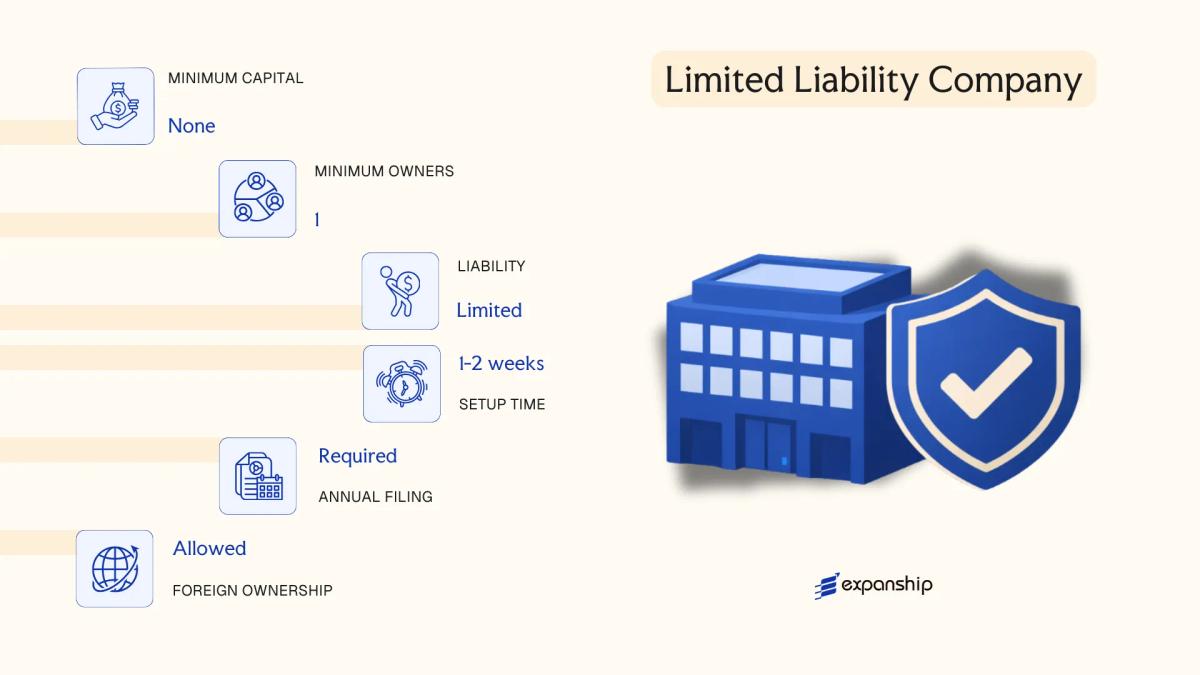
The Mongolia LLC, or Хязгаарлагдмал Хариуцлагатай Компани (ХХК), is the most widely registered commercial entity in the country. Governed by the Company Law of Mongolia (2011, as amended), it carries a separate legal personality, meaning the business holds rights and obligations independently of its members.
Liability is capped at each member's capital contribution. This hybrid structure combines the protection of a corporate form with comparatively flexible internal governance, making it accessible for both domestic operators and foreign investors.
Key Characteristics
| Requirement | Detail | Notes |
|---|---|---|
| Legal Form | Limited Liability Company (ХХК) | Separate legal entity under Company Law of Mongolia (2011) |
| Members | 1 to 50 shareholders | Referred to as members (гишүүд); 100% foreign ownership permitted |
| Governance | At least one director | No nationality or residency requirement for directors under general rules |
| Local Presence | Registered address in Mongolia required | A physical or registered office address must be maintained with the General Authority for State Registration (GASR) |
| Capital | No statutory minimum capital | Contributions can be cash or in-kind; denominated in MNT |
| Privacy | Member details filed with GASR | Register is not fully public; however, disclosure to authorities is mandatory |
Focus Points
- Taxation: Subject to 10% corporate income tax on taxable profits; VAT applies at 10% on turnover exceeding the registration threshold; withholding tax on dividends paid to non-residents is generally 20%.
- Annual Compliance: Annual financial statements must be submitted to the relevant tax authority; GASR registration details require updating upon any structural change.
- Treaty Access: Mongolia maintains double taxation agreements with several countries; ХХК entities may access treaty benefits subject to beneficial ownership requirements.
- Restrictions: Member count is capped at 50; exceeding this threshold triggers a mandatory conversion to a Joint Stock Company.
- Economic Substance: No formal economic substance legislation currently mirrors offshore regimes, but tax residency and permanent establishment rules apply under the General Tax Law.
Closing
The ХХК suits trading operations, holding structures, and service-oriented businesses where operational flexibility and liability protection are priorities. Its principal constraint is the 50-member ceiling, which limits capital-raising through a broad shareholder base.
Best suited for small to mid-sized foreign investors and joint ventures seeking straightforward limited liability company registration in Mongolia without the disclosure and governance burden of a public entity.
Partnerships (General Partnership, Limited Partnership)
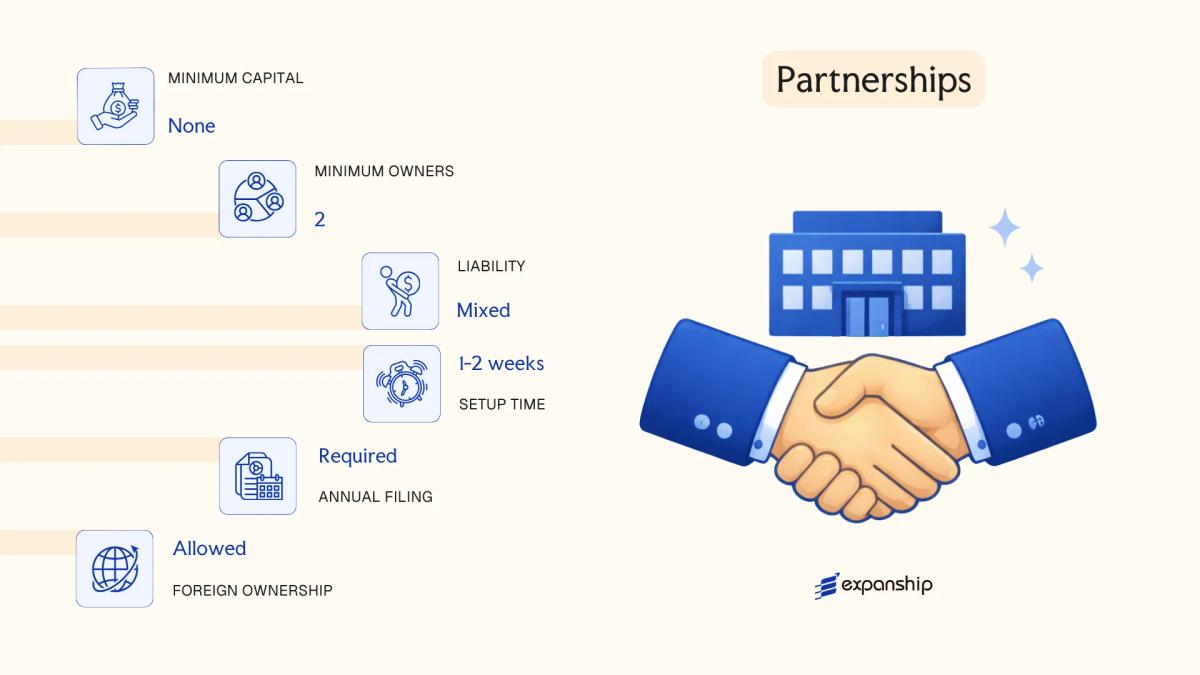
Both general and limited partnership Mongolia structures are governed by the Law on Companies of Mongolia (2011), which distinguishes between the two forms in terms of member liability and operational authority. Neither structure grants partners the same separation of personal and business assets available to corporate shareholders.
Registered with the General Authority for State Registration (GASR), both partnership types acquire legal personality upon incorporation. The distinction lies in liability exposure: general partners bear unlimited personal liability, while limited partners' risk is capped at their contributed capital.
Key Characteristics
| Requirement | Detail | Notes |
|---|---|---|
| Legal Form | Partnership (Нөхөрлөл) | Recognized under the Law on Companies (2011) |
| Members | General: minimum 2 general partners; Limited: minimum 1 general partner + 1 limited partner | No statutory maximum specified; partners are referred to as general partners or limited partners |
| Local Presence | Registered address in Mongolia required | Must maintain a registered address on file with GASR |
| Capital | No prescribed minimum capital; contributions in cash or in kind | Capital structure defined in the partnership agreement |
| Liability | General partners: unlimited personal liability; Limited partners: liable only to the extent of their contribution | Limited partners may not participate in management |
| Privacy | Partner names are recorded in the state registry | Registry records are accessible to the public |
Focus Points
- Taxation: Partnerships are generally treated as pass-through entities for tax purposes, with income taxed at the partner level; corporate income tax, VAT registration thresholds, and withholding tax obligations on distributions still apply depending on partner residency and income type.
- Annual Compliance: Partners must file annual financial statements with GASR and meet reporting obligations under the General Tax Authority.
- Restrictions: Limited partners who actively participate in management may lose their liability protection under Mongolian law.
- Treaty Access: Access to Mongolia's double taxation treaties depends on the residency status of individual partners, not the partnership itself.
- Conversion: Conversion to a Limited Liability Company or Joint Stock Company is possible but requires re-registration with GASR and partner consent.
Sub-Types
General Partnership (Ерөнхий Нөхөрлөл)
All partners carry unlimited joint and several liability for the partnership's obligations. This structure is typically used by professional groups or small-scale ventures where all participants are actively involved in operations.
Limited Partnership (Хязгаарлагдмал Нөхөрлөл)
At least one general partner assumes unlimited liability while one or more limited partners contribute capital without taking on management responsibilities. This arrangement is commonly used when passive investors wish to participate financially without operational involvement.
Closing
Partnerships suit smaller, domestically focused ventures or professional arrangements where partners have an established relationship and are comfortable with shared governance. The principal advantage is structural simplicity; the clear limitation is the unlimited personal liability carried by general partners.
This structure is best suited for small professional firms or domestic joint ventures where all active participants are known to one another and accept personal liability exposure.
Foreign Business Structures (Branch Office, Representative Office)
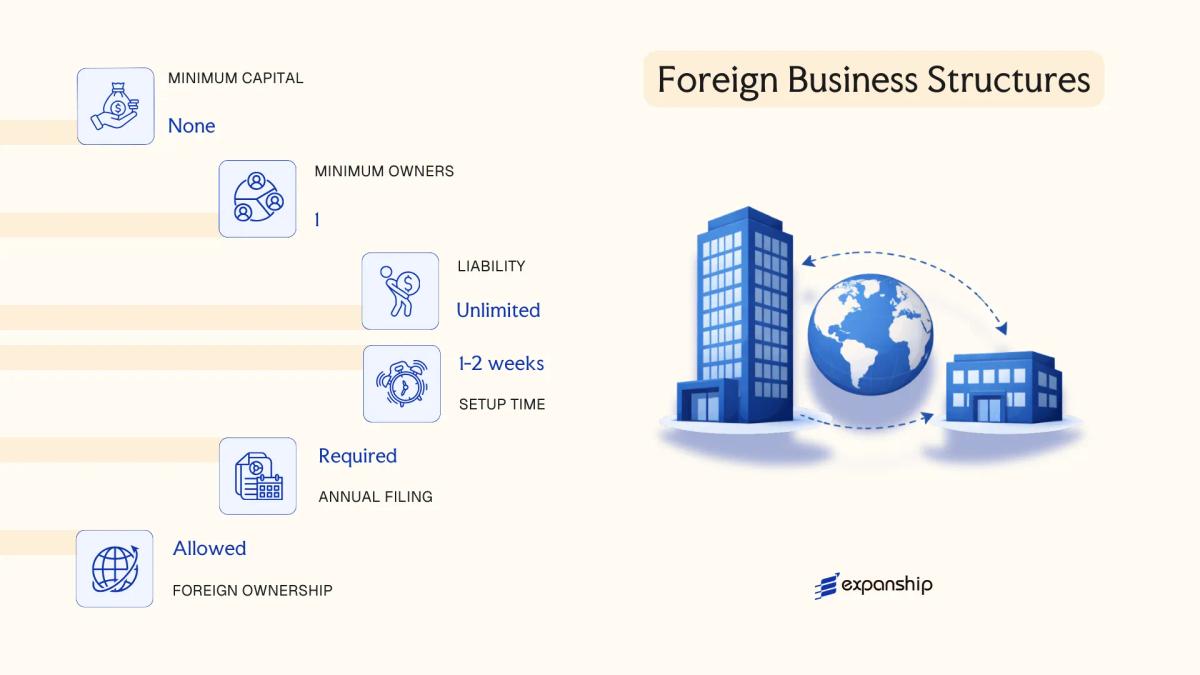
A foreign company branch office in Mongolia is governed primarily by the Company Law of Mongolia (2011) and the Law on Foreign Investment (2013). Neither a branch office nor a representative office constitutes a separate legal entity; both remain extensions of the parent company, which retains full liability for their activities on Mongolian soil.
Registration for both structures is administered through the State Registration General Office (SRGO). The distinction between the two lies in permitted scope: a branch may conduct commercial operations, whereas a representative office is restricted to non-commercial functions such as market research, liaison, and promotional activities.
Key Characteristics
| Requirement | Branch Office | Representative Office |
|---|---|---|
| Legal Form | Extension of foreign parent; no separate legal personality | Extension of foreign parent; no separate legal personality |
| Authorised Representatives | Appointed manager (resident or non-resident) | Appointed chief representative |
| Commercial Activity | Permitted | Not permitted |
| Local Presence | Registered address in Mongolia required | Registered address in Mongolia required |
| Capital | No statutory minimum; parent company capital applies | No statutory minimum |
| Registration Body | State Registration General Office (SRGO) | State Registration General Office (SRGO) |
Focus Points
- Taxation: Branch profits are subject to corporate income tax at 10–25% on a progressive scale; VAT applies at 10% if turnover thresholds are met; withholding tax may apply on remittances to the parent depending on applicable double tax treaty provisions.
- Economic Substance: No formal substance regime, but the branch must maintain a functional local address and an appointed manager.
- Annual Compliance: Annual re-registration with the SRGO is required; financial statements must be filed locally.
- Treaty Access: Mongolia has concluded double tax treaties with approximately 30 countries; treaty benefits depend on whether the branch constitutes a permanent establishment under the relevant agreement.
- Restrictions: A representative office may not generate revenue or enter into commercial contracts on its own behalf.
Sub-Types
Branch Office
Operates as a full commercial extension of the parent entity, able to conclude contracts, invoice clients, and employ staff directly under Mongolian labour law.
Representative Office
Functions solely in a preparatory or auxiliary capacity. It cannot issue invoices or derive income, making it suitable only for firms assessing market conditions or managing relationships ahead of a fuller commercial commitment.
Both structures suit foreign firms testing the market or managing regional operations without committing to full local incorporation. The principal advantage is the absence of a minimum capital requirement; the core limitation is that the parent company bears unlimited liability for all obligations incurred.
These structures are best suited for established foreign companies that require a defined legal presence for operational or contractual purposes but are not yet prepared to incorporate a locally domiciled entity.
Sole Proprietorship (Ганцаарчилсан Хөдөлмөр Эрхлэгч)
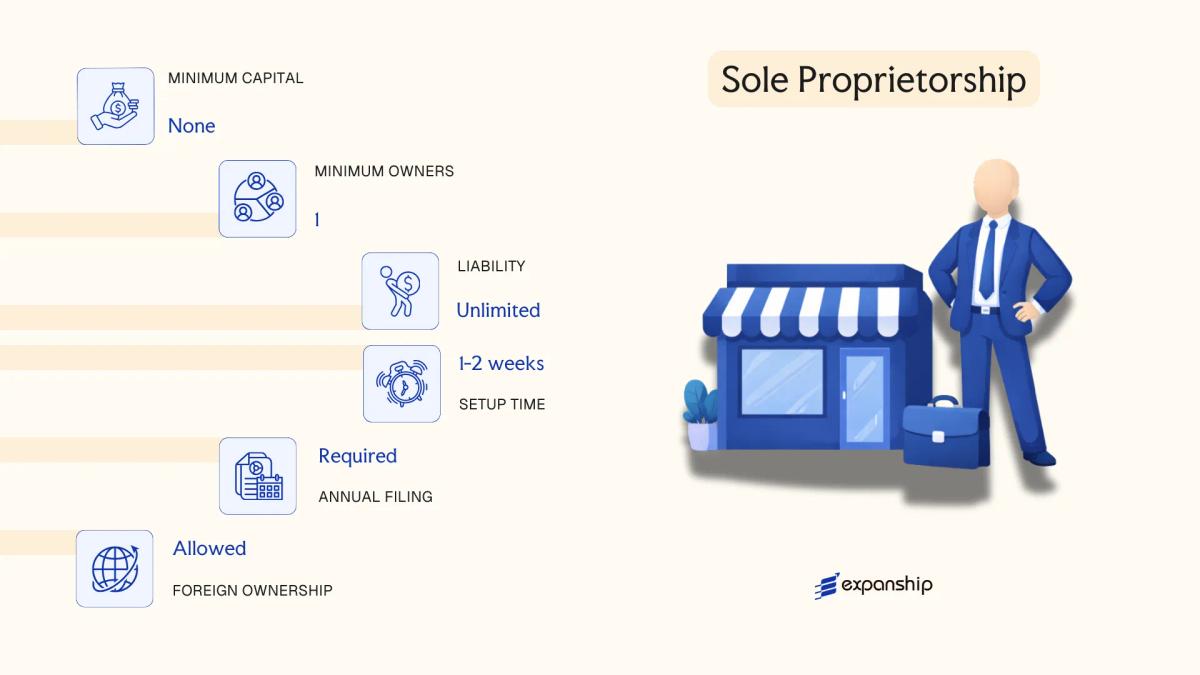
Registered under the Law on Business Entities of Mongolia (2011, as amended), a sole proprietorship — or Ганцаарчилсан Хөдөлмөр Эрхлэгч — is the simplest self-employed business registration Mongolia recognises. It carries no separate legal personality; the proprietor and the business are treated as one and the same under Mongolian law.
Liability exposure is unlimited. All business debts and legal obligations fall directly on the individual, with no statutory shield separating personal assets from commercial risk.
Key Characteristics
| Requirement | Detail | Notes |
|---|---|---|
| Legal Form | Unincorporated individual enterprise | No separate legal personality from the owner |
| Members | Single proprietor only | No partners or shareholders permitted |
| Local Presence | Registered business address required | Registration is filed with the General Authority for State Registration (GASR) |
| Capital | No statutory minimum | Denominated in Mongolian Tögrög (MNT) |
| Liability | Unlimited personal liability | Personal assets are exposed to business creditors |
| Privacy | Name of proprietor is publicly registered | No confidentiality provisions under current law |
Focus Points
- Taxation: Subject to personal income tax; VAT registration is required once annual turnover exceeds the statutory threshold set by the General Tax Authority.
- Annual Compliance: Must file annual income tax returns with the General Tax Authority; bookkeeping obligations apply.
- Treaty Access: Cannot independently access double taxation treaties, as treaty benefits generally apply to resident legal entities or individuals in their personal capacity.
- Conversion: Can be converted into a Limited Liability Company by re-registering with GASR, though this involves a full incorporation process.
- Restrictions: Foreign nationals face restrictions on operating as individual entrepreneurs Mongolia-wide; this structure is primarily accessible to Mongolian citizens and permanent residents.
Closing
A sole proprietorship suits small-scale local trading, freelance services, and individual entrepreneurs operating with minimal overhead. Its primary advantage is ease and low cost of setup; its defining drawback is unrestricted personal liability for all business obligations.
This structure is best suited for Mongolian resident individuals running low-risk, single-person operations who do not require foreign investment or liability protection.
How to Choose the Right Entity Type in Mongolia
Selecting the correct structure is a legal and operational decision with binding consequences — not a procedural formality.
Why Your Entity Choice Matters
- A branch office conducting commercial transactions beyond its registered scope violates the Law on Licensing and the Company Law of Mongolia, and can result in forced deregistration by the General Authority for State Registration (GASR).
- Forming a structure that lacks treaty eligibility under Mongolia's double taxation agreements means your business cannot claim reduced withholding tax rates on dividends, interest, or royalties paid to foreign recipients.
- Registering a Joint Stock Company when a single-member LLC would suffice obligates your business to maintain a board of directors, hold annual shareholder meetings, and file audited financial statements — costs and obligations that do not apply to smaller LLCs below the statutory audit threshold.
- Selecting a representative office when your operations require revenue-generating activity creates a structural mismatch, as representative offices are prohibited from conducting commercial transactions under Mongolian law.
Key Factors to Consider
- Business Activity: Active trading, regulated sectors such as banking or mining, and passive asset-holding each correspond to distinct permissible structures under the Company Law of Mongolia.
- Ownership Structure: A single founder may prefer the simplified governance of an LLC, while multi-party ventures requiring transferable share capital point toward a Joint Stock Company.
- Tax Position: Your eligibility for treaty benefits, the standard 10% corporate income tax rate, or sector-specific exemptions depends on entity classification and residency status.
- Operational Scope: Whether your firm will employ staff, lease premises, and generate local revenue determines whether a full legal entity or a representative structure is appropriate.
- Substance Capacity: If you cannot maintain genuine management and operations within the jurisdiction, certain entity types will expose your business to recharacterisation risk under GASR oversight.
- Exit and Restructuring: Not all Mongolian entity types support redomiciliation or conversion; confirm whether your chosen structure permits transformation into another form before incorporation.
Compliance Services for Companies in Mongolia
Ongoing compliance support for Mongolian entities, including annual filing, statutory obligations, and regulatory reporting with GASR.
Conclusion
Selecting the right structure is the first substantive decision in any Mongolia company formation, and this guide has outlined the options governed primarily by the Law on Companies (2011, as amended) and administered through the Legal Entities Registration Office (LERO).
Registered LLCs account for the majority of foreign-invested entities, reflecting the structure's balance of limited liability and relatively low capital requirements. Joint stock companies suit businesses anticipating public investment or share-based financing. Partnerships carry unlimited liability exposure and remain uncommon among foreign investors. Branch and representative offices serve specific operational mandates without creating a separate legal person. Sole proprietorships fit individual traders operating domestically.
Mongolia's continued engagement with bilateral investment treaty partners and its expanding tax treaty network signal a gradual shift toward greater regulatory transparency. Your choice of corporate structure will affect tax treaty access, profit repatriation options, and long-term compliance obligations under Mongolian law.
How Expanship Can Assist You
Expanship Mongolia company incorporation services cover the full process of establishing a legal entity under Mongolian law, from selecting the right structure — an LLC (ХХК), JSC, branch, or representative office — through to registration with the General Authority for State Registration (GASR). Your obligations don't end at registration; annual reporting, capital requirements, and director responsibilities all require ongoing attention.
Expanship handles the administrative and regulatory work so your business can operate without procedural delays:
- Document preparation, notarization, and legalization
- Registered agent and local office address provision
- Filing and liaison with GASR and relevant government bodies
- Post-incorporation compliance management, including annual reporting
- Corporate changes such as director appointments and capital amendments
- Banking introduction assistance for opening a local account
Reach out to Expanship Mongolia to discuss your incorporation requirements directly.
Frequently Asked Questions (FAQ)
The Limited Liability Company (LLC), governed by the Company Law of Mongolia, is the most frequently incorporated structure. Its combination of limited liability protection and relatively straightforward registration requirements under the General Authority for State Registration makes it the default choice for small to medium-sized businesses.
A Branch Office is an extension of a foreign parent entity and does not hold separate legal personality under Mongolian law, meaning the parent bears full legal liability for its operations. An LLC is an independently incorporated entity subject to Mongolian corporate income tax on its local earnings, whereas a Branch is taxed on income attributed to its Mongolian activities. Compliance obligations for an LLC are generally broader, including annual reporting and shareholder meeting requirements.
Among registered structures, the LLC permits nominee arrangements for shareholders, though director information is filed with the General Authority for State Registration. Beneficial ownership disclosure requirements have expanded under Mongolia's anti-money laundering framework, limiting absolute privacy across all entity types.
A sole proprietorship and an LLC can both be established by one individual. Partnerships, by legal definition, require a minimum of two partners, so a single founder cannot form a General or Limited Partnership without at least one additional party.
Foreign individuals and foreign legal entities may register an LLC, a Joint Stock Company, a Branch Office, or a Representative Office. Each requires registration with the General Authority for State Registration, and foreign investment activities may additionally fall under the scope of the Law on Investment, which governs foreign equity participation in certain sectors.
Mongolian corporate law permits restructuring between entity types, most commonly from an LLC to a Joint Stock Company as a business scales toward public capital markets. The conversion process involves amended registration filings and updated constitutional documents submitted to the General Authority for State Registration.
No. A Representative Office and a Branch Office do not constitute independent legal entities under Mongolian law; both operate as extensions of their foreign parent. An LLC, Joint Stock Company, and registered partnerships each hold distinct legal personality, allowing them to contract, own assets, and incur liabilities in their own name.
A sole proprietorship involves minimal statutory requirements compared to corporate structures, with no mandatory audit or board meeting obligations. A Representative Office also carries limited compliance burdens, though its restricted operational scope means it cannot generate revenue from Mongolian sources.
Legal Disclaimer
The information provided in this article is for general informational purposes only and does not constitute legal, tax, or professional advice. While we strive to ensure the accuracy and timeliness of the content, laws and regulations are subject to change, and the application of laws can vary widely based on specific facts and circumstances.
Readers should not act upon this information without seeking professional counsel tailored to their individual situation. Expanship and its authors disclaim any liability for actions taken or not taken based on the content of this article.
For specific advice regarding your business setup, compliance requirements, or any legal matters, please consult with qualified legal and tax professionals in the relevant jurisdiction.