
Key Takeaways
- The Liberia Business Registry (LBR), operating under the Ministry of Commerce and Industry, administers the incorporation of all domestic and foreign business structures across entity types including Public Corporations, LLCs, and Branch Offices.
- Liberia applies a territorial tax system, meaning income generated outside the country is generally not subject to domestic taxation, which directly affects structuring decisions for internationally oriented entities.
- Under the Liberian Business Corporation Act, the LLC provides liability separation without imposing the same corporate formalities required of Public or Private Corporations, making it a structurally distinct option for shareholders.
- General Partnerships carry unlimited joint liability for all partners, whereas Limited Partnerships allow passive investors to participate without that personal exposure, a distinction governed by the same Liberian legislative framework.
Introduction to Entity Types in Liberia
Located on the west coast of Africa, Liberia shares borders with Sierra Leone, Guinea, and Côte d'Ivoire. It is an independent republic and one of the continent's oldest sovereign states. Choosing among the available business entity types in Liberia requires an understanding of the legal framework that governs formation, liability, and ongoing compliance obligations.
Company registration falls under the authority of the Liberia Business Registry (LBR), which operates under the Ministry of Commerce and Industry. The LBR administers the incorporation and registration of all domestic and foreign business structures operating within the country. Liberia applies a territorial tax system, meaning that income sourced outside the country is generally not subject to domestic taxation.
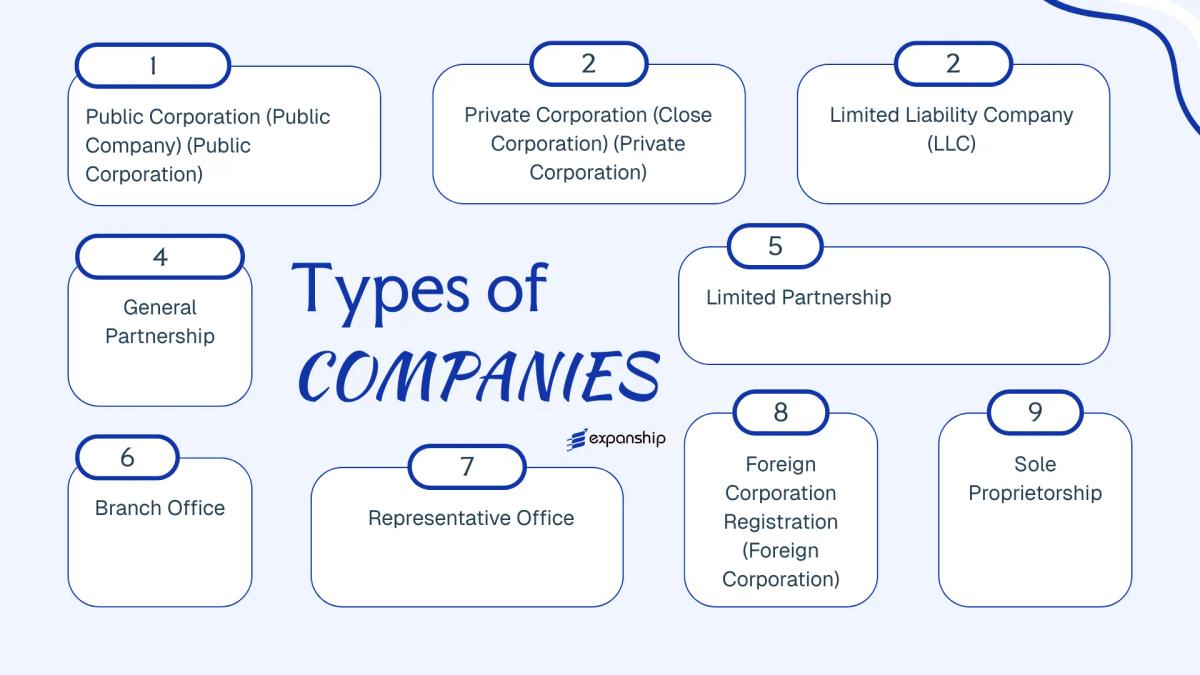
The principal structures available under Liberian law include the Public Corporation, Private Corporation, Limited Liability Company, General Partnership, Limited Partnership, Branch Office, Representative Office, Foreign Corporation, and Sole Proprietorship. Each carries distinct requirements relating to ownership, governance, and liability. This article examines each structure in turn, drawing on the provisions of the Liberian Business Corporation Act and related legislation.
An Overview of Business Structures in Liberia
Liberia recognises several distinct business entity types under a single overarching framework. The primary legislation governing company formation is the Liberian Business Corporation Act, which sits within the broader Associations Law of Liberia. Each entity type carries different implications for liability, ownership structure, and permitted commercial activity.
Business Structures at a Glance
| Entity Type | Legal Form | Liability | Taxed / Exempt | Local Trading | Minimum Members | Regulatory Authority | Governing Act |
|---|---|---|---|---|---|---|---|
| Public Corporation | Corporate body | Limited to shareholding | Taxable | Permitted | 3 directors | Liberia Business Registry | Business Corporation Act |
| Private Corporation | Corporate body | Limited to shareholding | Taxable | Permitted | 1 shareholder | Liberia Business Registry | Business Corporation Act |
| LLC | Hybrid entity | Limited to contribution | Taxable | Permitted | 1 member | Liberia Business Registry | Business Corporation Act |
| General Partnership | Unincorporated | Unlimited, joint | Taxable | Permitted | 2 partners | Liberia Business Registry | Partnership Act |
| Limited Partnership | Unincorporated | Mixed (general/limited) | Taxable | Permitted | 2 partners | Liberia Business Registry | Partnership Act |
| Branch Office | Extension of foreign entity | Parent bears liability | Taxable | Permitted | N/A | Liberia Business Registry | Associations Law |
| Representative Office | Non-trading entity | Parent bears liability | Generally exempt | Not permitted | N/A | Liberia Business Registry | Associations Law |
| Sole Proprietorship | Unincorporated | Unlimited, personal | Taxable | Permitted | 1 owner | Liberia Business Registry | General commerce law |
Each of these structures is examined in full in the sections below.
Public Corporation (Public Company) Under the Liberian Business Corporation Act
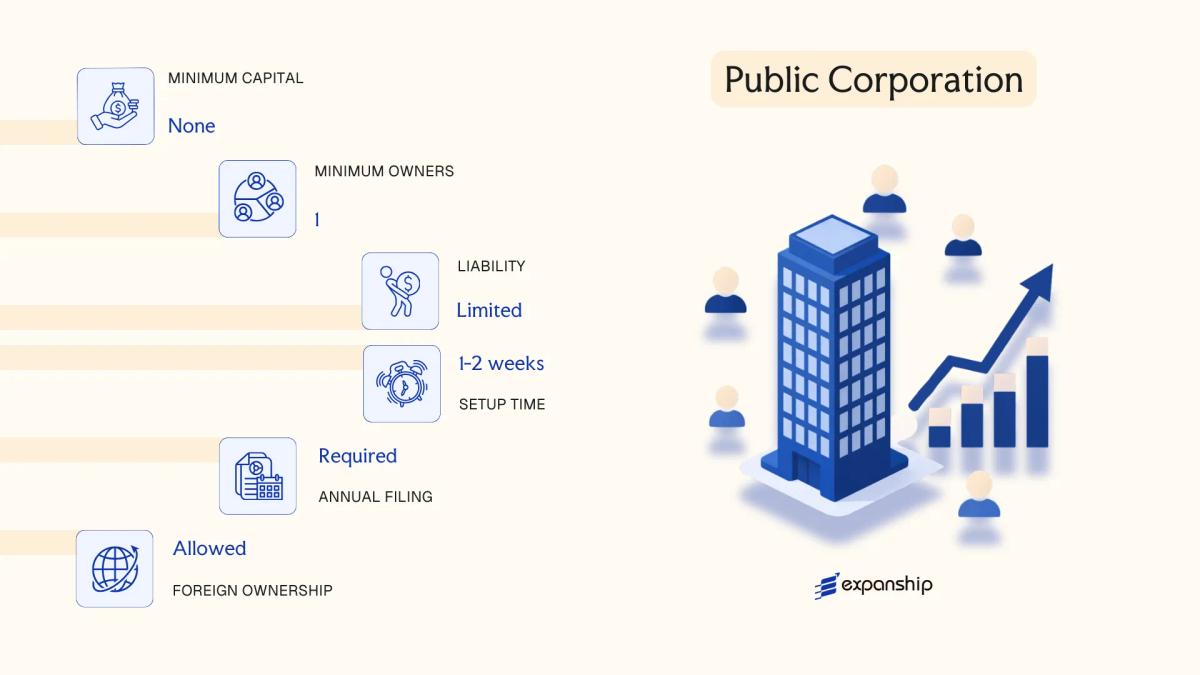
Governed by the Liberia Business Corporation Act (BCA), a public corporation is the most structurally open form of company registration available under Liberian law. The BCA grants the entity separate legal personality, meaning it exists independently of its shareholders and can own assets, enter contracts, and incur liabilities in its own name.
Shareholder liability is limited to the amount invested. This structure suits businesses intending to raise capital from the general public, including through stock exchange listings, making Liberian public company registration particularly relevant for large-scale commercial or maritime ventures.
Key Characteristics
| Requirement | Detail | Notes |
|---|---|---|
| Legal Form | Public Corporation under the BCA | Separate legal personality; shares freely transferable |
| Members | Shareholders (no maximum); minimum 1 shareholder | Directors manage the company; minimum 1 director required |
| Local Presence | Registered Agent required | Physical office not mandatory; registered agent must be resident in Liberia |
| Capital | No statutory minimum share capital; USD typically used | Shares may be issued with or without par value |
| Privacy | Shareholder and director names are on public record | Beneficial ownership disclosure requirements apply |
Focus Points
- Taxation: Subject to corporate income tax on Liberia-sourced income; businesses operating internationally may have limited local tax exposure, but should confirm current rates with the Liberia Revenue Authority.
- Annual Compliance: Annual report filing and registered agent maintenance required; failure to comply risks administrative dissolution.
- Economic Substance: No formal substance regime comparable to some offshore centers, but activities conducted within the jurisdiction are subject to local regulatory oversight.
- Treaty Access: Liberia has a limited tax treaty network; public corporations should not assume broad treaty protection without specific verification.
- Conversion: A public corporation may be converted to a private corporation (close corporation) under the BCA, subject to shareholder approval and statutory procedures.
Closing
Incorporating a public company in Liberia suits large commercial enterprises, shipping and maritime holding structures, and businesses seeking to issue shares publicly. The freely transferable share structure is a clear operational advantage; however, public disclosure of directors and shareholders reduces confidentiality compared to other available structures.
Best suited for large commercial enterprises, ship-owning entities, or businesses requiring broad capital-raising capacity through public share issuance.

Company Incorporation in Liberia
Incorporate a public or private corporation in Liberia with full registered agent support and compliance management.
Private Corporation (Close Corporation) Under the Liberian Business Corporation Act
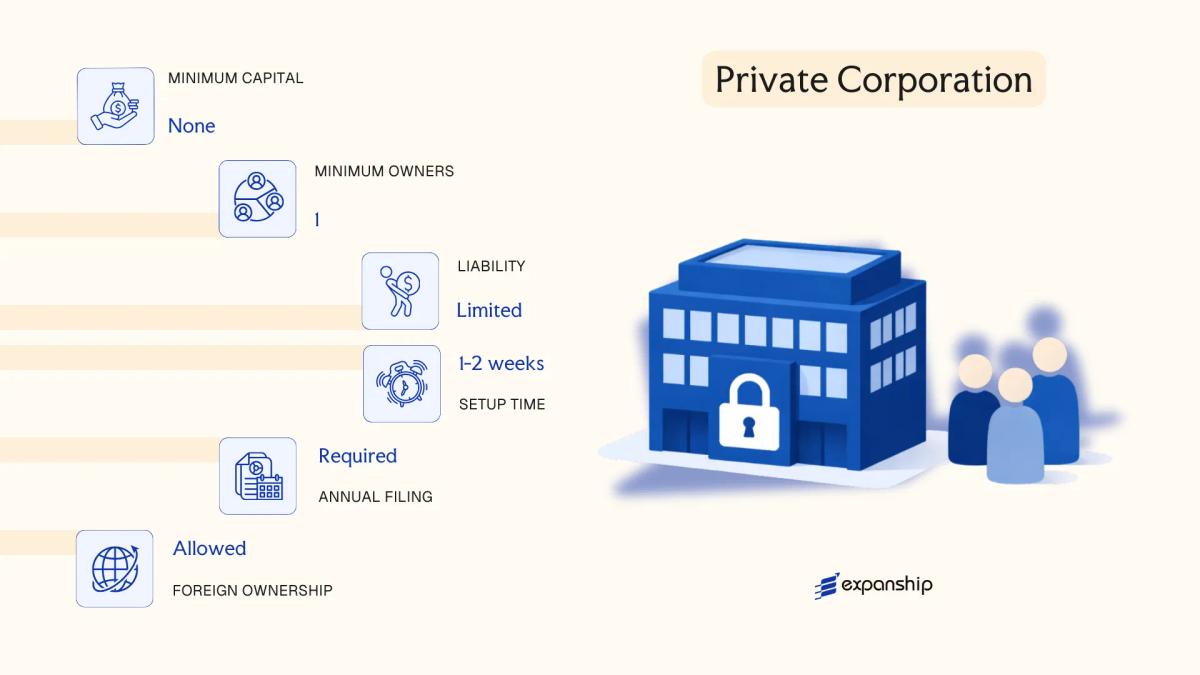
Governed by the Business Corporation Act of Liberia, a close corporation is a privately held entity with separate legal personality and limited liability for its shareholders. Liberia close corporation formation suits founders who want the structural protections of a corporation without the disclosure requirements associated with public issuance.
Unlike a public company, a close corporation restricts share transfers and keeps ownership within a defined group. This makes it a practical vehicle for family-owned businesses, joint ventures, and small-to-medium commercial operations where control concentration matters.
Key Characteristics
| Requirement | Detail | Notes |
|---|---|---|
| Legal Form | Private corporation with separate legal personality | Liability limited to paid-in capital |
| Members | Shareholders; minimum 1, maximum 30 | Share transfers restricted by articles |
| Directors | Minimum 1 director | Director and shareholder may be the same person |
| Local Presence | Registered agent required | Physical office not mandatory for non-resident entities |
| Capital | No statutory minimum; denominated in USD | Shares may be par or no-par value |
| Privacy | Shareholder names not publicly disclosed | Directors may appear in filings depending on structure |
Focus Points
- Taxation: Subject to standard corporate income tax on Liberia-sourced income; VAT, withholding tax, and stamp duty obligations apply depending on transaction type and sector.
- Annual Compliance: Annual corporate filings and tax returns required; failure attracts penalties under the Revenue Code.
- Economic Substance: Non-resident entities conducting passive activities should assess substance requirements applicable under current regulations.
- Conversion: A close corporation may be converted to a public company by amending its articles and meeting statutory thresholds under the Business Corporation Act.
- Restrictions: Share transfer to non-approved parties is typically prohibited unless the articles expressly permit it.
Closing
A private corporation suits holding structures, trading companies, and owner-managed businesses where concentrated ownership and confidentiality are priorities. The restricted share transfer mechanism preserves control but limits the entity's ability to raise capital from outside investors.
Founders seeking limited liability with tight ownership control — particularly for joint ventures, family businesses, or closely held commercial operations in Liberia.
Limited Liability Company (LLC) Under the Liberian Business Corporation Act
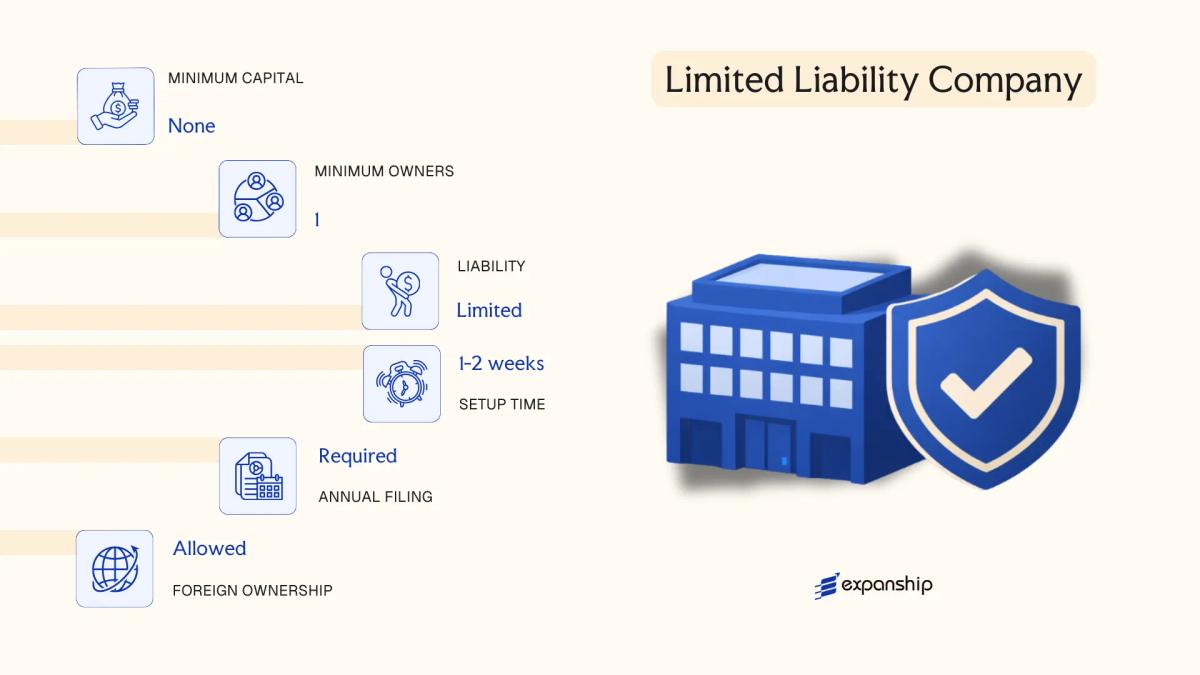
Liberia LLC formation under the Business Corporation Act (BCA), originally enacted in 1976 and subsequently revised, provides a hybrid structure that combines corporate limited liability with partnership-style operational flexibility. The LLC exists as a separate legal entity, meaning members are not personally liable for the debts or obligations of the business beyond their capital contribution.
Membership interests replace share capital as the ownership mechanism, and governance can be structured through an operating agreement, giving members considerable freedom to define internal management arrangements without the formalities required of a corporation.
Key Characteristics
| Requirement | Detail | Notes |
|---|---|---|
| Legal Form | Limited Liability Company | Separate legal personality under the BCA |
| Members | Referred to as Members; minimum 1, no statutory maximum | Single-member LLCs are permitted |
| Management | Member-managed or manager-managed | Defined in the operating agreement |
| Local Presence | Registered Agent required | Physical office not mandated; agent must be locally licensed |
| Capital | USD; no statutory minimum | Contributions can be cash, property, or services |
| Privacy | Member names not publicly disclosed in filings | Operating agreement remains private |
Focus Points
- Taxation: Subject to general corporate income tax on Liberian-sourced income; VAT, withholding tax on certain payments, and stamp duty on instruments may apply depending on activities.
- Annual Compliance: Annual report and registered agent fees due to the Liberia Business Registry; failure results in good-standing penalties.
- Economic Substance: Entities engaged in relevant activities may be subject to substance requirements under applicable regulations.
- Treaty Access: Liberia has a limited tax treaty network; LLC access to treaty benefits depends on the counterpart jurisdiction's recognition of the entity type.
- Conversion: The BCA permits conversion between entity types, subject to statutory procedures and regulatory approval.
Closing
The LLC structure suits holding arrangements, joint ventures, and businesses requiring flexible profit distribution without the governance overhead of a full corporation. Its main advantage is the combination of liability protection with minimal formality; the primary limitation is that the LLC form is less universally recognised than a corporation when dealing with foreign counterparties or accessing capital markets.
The Liberian LLC is most appropriate for small-to-mid-size ventures, joint ventures, and holding structures where operational flexibility and member privacy are priorities over external fundraising.
Partnership Structures [General Partnership, Limited Partnership]
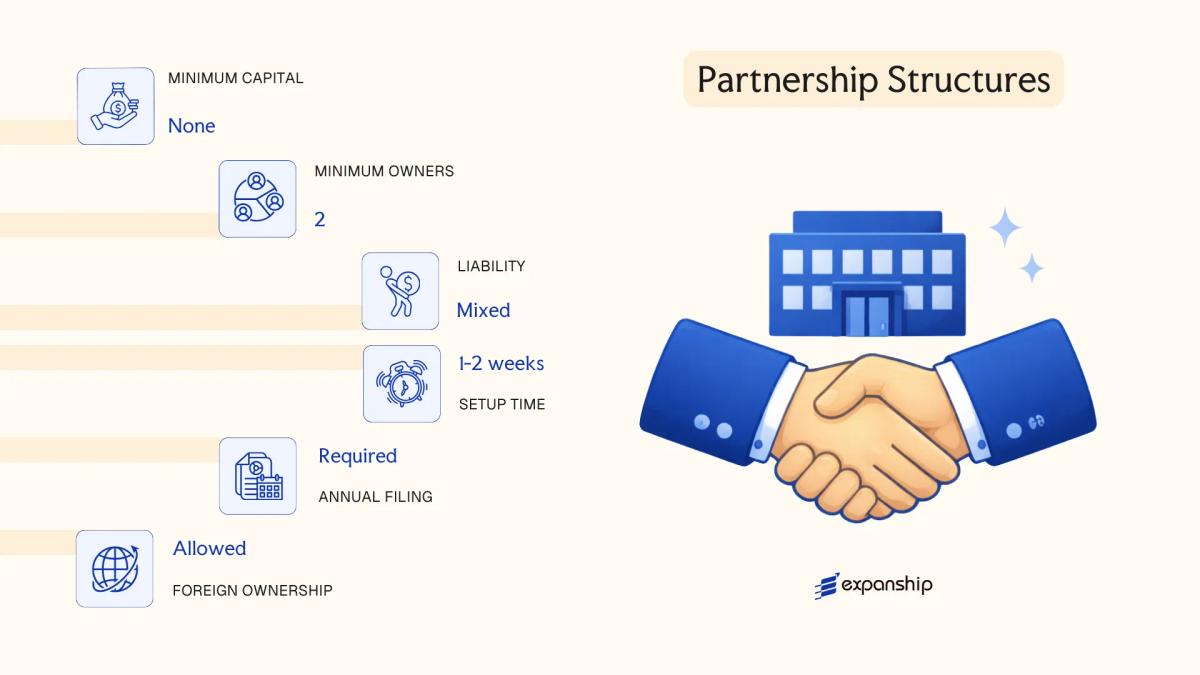
Liberia recognises two principal partnership forms under the Uniform Partnership Act and related statutes: the general partnership and the limited partnership. Proceeding with a Liberia limited partnership registration requires understanding how each structure allocates liability, management authority, and profit entitlement among its partners.
A general partnership does not confer separate legal personality distinct from its members, meaning partners bear unlimited joint and several liability for the firm's obligations. A limited partnership, by contrast, provides liability protection to passive investors while preserving the operational flexibility absent in corporate structures.
Key Characteristics
| Requirement | General Partnership | Limited Partnership |
|---|---|---|
| Legal Personality | None — partners trade collectively | Limited separate identity upon registration |
| Members | General partners (min. 2, no statutory max) | Min. 1 general partner + 1 limited partner |
| Liability | Unlimited for all partners | General partner: unlimited; limited partner: capped at contribution |
| Local Presence | Registered agent required | Registered agent required |
| Capital | No statutory minimum; contributions defined by agreement | No statutory minimum |
| Privacy | Partnership agreement not publicly filed | Certificate of limited partnership filed with the Ministry of Commerce |
Focus Points
- Taxation: Partnerships are generally treated as pass-through entities; income is taxed at the partner level under the Liberia Revenue Code, not at the entity level — no separate corporate income tax, though withholding tax may apply to distributions to non-resident partners.
- Annual Compliance: Annual renewal filings and registered agent maintenance are required to remain in good standing.
- General Partnership Liberia Formation: No formal registration is mandated for a general partnership, though a written partnership agreement is strongly advisable.
- Restrictions: A general partner in a limited partnership cannot limit their own liability without converting to a different structure.
Sub-Types
General Partnership (GP)
All partners participate in management and carry unlimited personal liability. This structure suits small professional firms or joint ventures where all parties are actively involved.
Limited Partnership (LP)
One or more general partners manage operations while limited partners contribute capital without taking part in day-to-day decisions. The LP is commonly used for investment vehicles and project finance arrangements.
Closing
Partnership structures suit joint ventures, investment pooling, and project-specific arrangements where pass-through taxation and flexible profit allocation are priorities. The absence of a minimum capital requirement is a practical advantage, though the unlimited liability carried by general partners represents a material exposure that should not be underestimated.
Liberian partnership structures are most appropriate for two or more parties seeking a contractually flexible arrangement — particularly where pass-through tax treatment and capital pooling take precedence over liability insulation.
Foreign Business Entities [Branch Office, Representative Office, Foreign Corporation Registration]
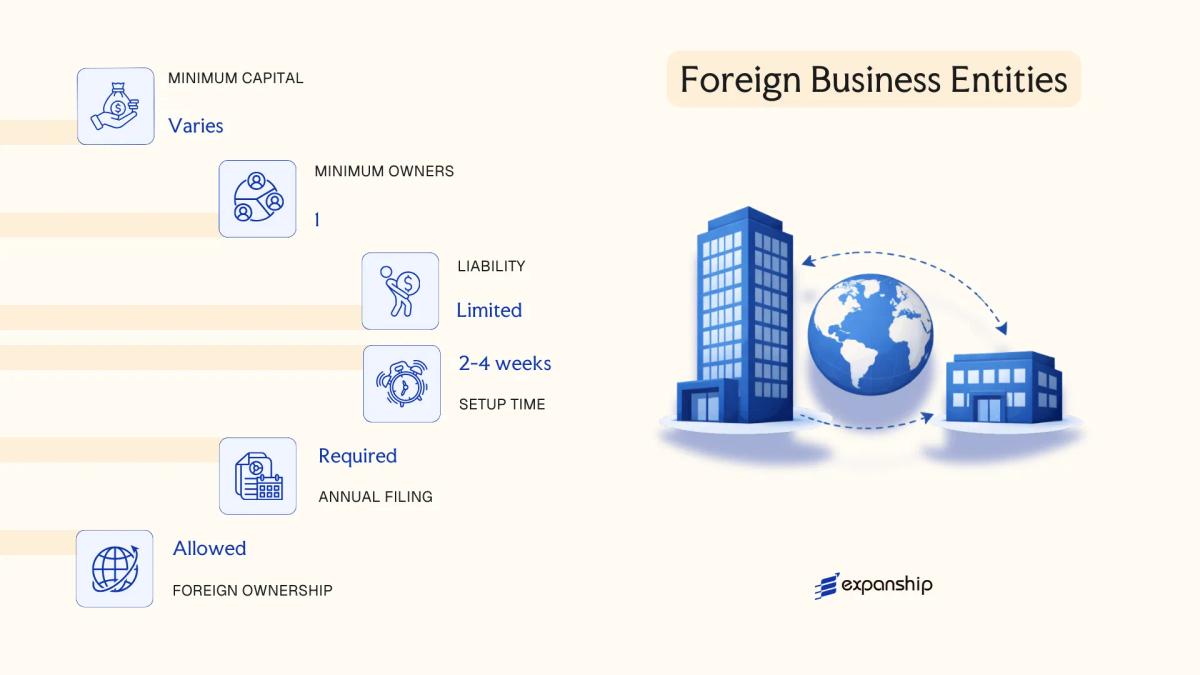
Foreign corporations seeking to establish a presence without incorporating a new entity have several options under the Business Corporation Act of Liberia (1976). Foreign company registration in Liberia allows an overseas business to operate through a branch, maintain a representative office, or register as a foreign corporation under Part IX of the Act. Each structure carries distinct legal and operational characteristics that affect liability, permissible activities, and tax exposure.
A branch office is not a separate legal entity — it remains an extension of the parent company, which bears full liability for its activities. A representative office is more restricted, typically limited to liaison and promotional functions rather than revenue-generating operations. Foreign corporation registration, by contrast, grants the overseas entity formal status to conduct business within the jurisdiction on a wider basis.
Key Characteristics
| Requirement | Detail | Notes |
|---|---|---|
| Legal Form | Extension or registered presence of a foreign parent | Branch and rep offices are not separate legal persons; foreign corp registration confers domestic standing |
| Authorised Representative | Local agent or director required | Must be resident or registered in Liberia |
| Local Presence | Registered Agent and local address mandatory | Administered through the Ministry of Commerce and Industry |
| Capital | No prescribed minimum for branch or rep office | Foreign corp registration may require proof of paid-up capital in home jurisdiction |
| Permitted Activities | Branch: commercial; Rep office: non-revenue activities only | Foreign corporation registration permits broader trade and contractual activity |
| Privacy | Parent company details disclosed on registration | Beneficial ownership subject to disclosure requirements |
Focus Points
- Taxation: Branch profits are subject to the standard corporate income tax rate; representative offices with no Liberian-source income may have limited tax exposure, though the position should be confirmed with the Liberia Revenue Authority.
- Economic Substance: No formal economic substance regime comparable to certain offshore centres, but commercial presence may be required to avoid classification as a shell operation.
- Annual Compliance: Annual returns and renewal of registration are required; non-compliance can result in deregistration by the Ministry of Commerce and Industry.
- Treaty Access: Liberia has a limited tax treaty network; foreign entities should verify whether their home jurisdiction has a bilateral agreement before assuming withholding tax relief.
- Restrictions: Representative offices cannot enter into revenue-generating contracts or invoice clients directly in-country.
Sub-Types
Branch Office
A branch is operationally indistinguishable from its parent and carries no limited liability protection for the foreign company. It is commonly used where the parent wishes to test a market or fulfil a specific contract without the administrative burden of incorporating a subsidiary.
Representative Office
A representative office functions solely as a liaison point — conducting market research, coordinating with local partners, or managing communications. It cannot generate income or sign commercial agreements on behalf of the parent.
Foreign Corporation Registration
This route formally qualifies an existing foreign entity to conduct general business under Liberian law, filing constitutional documents and appointing a registered agent. It is the most appropriate structure for sustained commercial operations that fall outside the scope of a branch or representative arrangement.
Foreign business entities are suited to multinationals entering the market for project-based work, market testing, or administrative support functions where a full subsidiary is not warranted. The principal advantage is speed of setup relative to incorporating a new company; the key limitation is that branch and representative structures do not provide any insulation of liability between the parent and its Liberian operations.
Established foreign companies seeking a controlled, low-commitment entry point into the Liberian market before committing to a locally incorporated subsidiary.
Sole Proprietorship
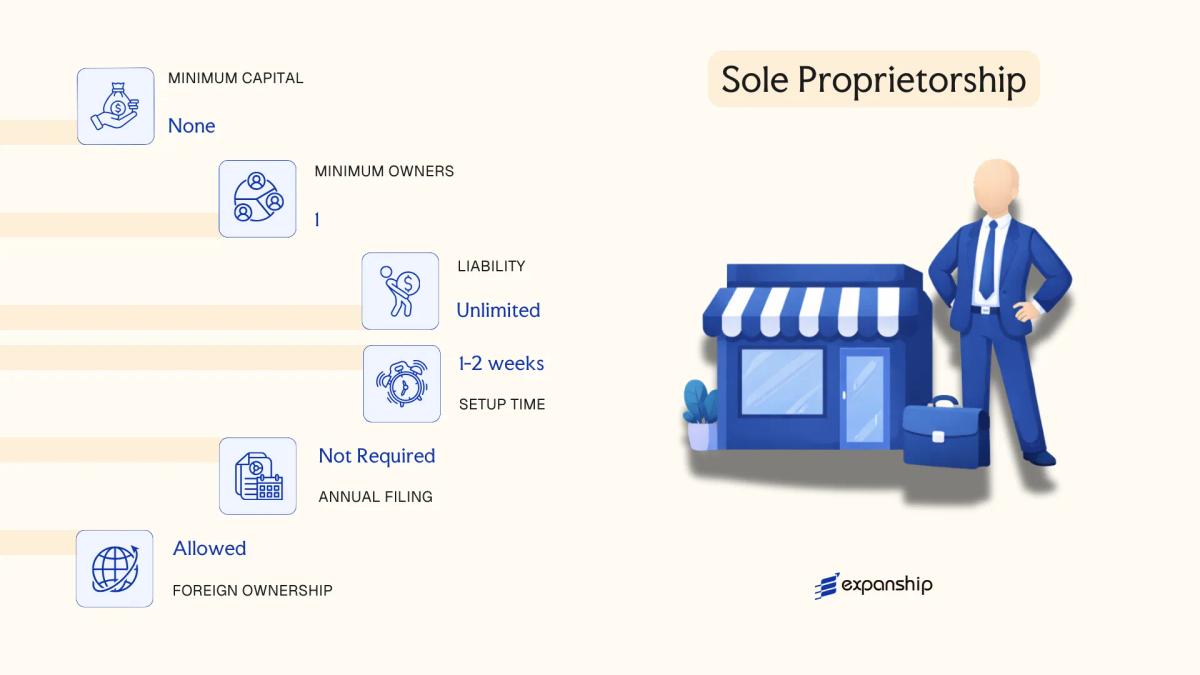
Sole proprietorship registration in Liberia represents the most straightforward form of business entry available to individual operators. Unlike corporations or LLCs, this structure carries no separate legal personality — the owner and the business are treated as a single legal unit. Governed under general commercial law principles and registered through the Liberia Business Registry (LBR), the process is comparatively simple.
Because there is no statutory separation between the proprietor's personal assets and business liabilities, the owner bears unlimited personal liability for all debts and obligations incurred. Registration typically requires filing a business name with the LBR under the Business Registry Act, along with applicable fees.
Key Characteristics
| Requirement | Detail | Notes |
|---|---|---|
| Legal Form | Unincorporated individual business | No separate legal personality from the owner |
| Owner Title | Sole Proprietor | Single individual; no partners, shareholders, or directors |
| Liability | Unlimited personal liability | Personal assets are exposed to business debts |
| Local Presence | Registered business name with LBR | Physical address in Liberia generally required |
| Capital | No statutory minimum | Owner contributes capital at discretion |
| Privacy | Business name publicly registered | Owner's identity linked directly to the registration |
Focus Points
- Taxation: Subject to personal income tax on business profits; VAT registration may apply if turnover exceeds the prescribed threshold; no separate corporate tax filing.
- Annual Compliance: Annual renewal of business name registration with the LBR is required to maintain active status.
- Restrictions: Foreign nationals face limitations on operating as sole traders; this structure is generally available to Liberian citizens or residents.
- Conversion: Can be converted into a corporation or LLC, though this requires a fresh incorporation process rather than a structural amendment.
- Treaty Access: No access to double tax treaty benefits, as treaties apply to resident companies rather than unincorporated individuals.
Closing
A sole proprietorship suits micro-scale trading, service providers, and artisans operating domestically with minimal overhead. The primary advantage is low setup cost and administrative simplicity; the significant drawback is unrestricted personal exposure to business liabilities.
This structure is most appropriate for Liberian residents running small-scale, low-risk local businesses with no plans for external investment or cross-border operations.
How to Choose the Right Entity Type in Liberia
Knowing how to choose a business entity in Liberia requires more than picking a familiar structure — the wrong choice produces specific, correctable-but-costly consequences under the Liberian Business Corporation Act.
Why Your Entity Choice Matters
Entity selection has direct legal and financial outcomes.
- Registering as a non-resident domestic corporation while conducting local trade breaches the Act's operating requirements and can result in administrative striking off.
- Choosing a tax-exempt entity eliminates access to bilateral tax treaty benefits, meaning counterpart jurisdictions will apply full withholding rates on dividends, interest, and royalties.
- Selecting a structure that requires audited financial statements when your firm is a single-person consultancy creates recurring annual audit costs with no regulatory benefit.
- Forming a corporation when asset protection is the primary goal locks you into annual shareholder meeting obligations and capital maintenance rules that do not apply to trust or foundation structures.
Key Factors to Consider
- Business Activity: Active trading, passive asset holding, and regulated sectors such as banking or insurance each require different entity forms under Liberian law.
- Local vs. Offshore Operations: Transacting with Liberian residents requires domestic registration; purely offshore activity may qualify for non-resident status.
- Ownership and Management: Multi-party ownership with formal governance points toward a corporation, while a single owner may find an LLC's flexible management structure more practical.
- Tax Objectives: Full exemption, treaty access, and sector-specific regimes are not available to all entity types simultaneously.
- Privacy Requirements: Public register disclosures of directors and shareholders vary by entity type; nominee structures may be necessary where confidentiality is a priority.
- Exit Strategy: Not all Liberian structures permit redomiciliation or conversion — verify these options before formation if future restructuring is anticipated.
Compliance Services for Companies in Liberia
Ongoing compliance support for Liberian entities, including annual filings, registered agent maintenance, and statutory reporting.
Conclusion
Liberia company incorporation conclusion guide distills to a single practical reality: the structure you register determines your tax exposure, liability boundaries, and operational permissions from day one.
Each entity type under the Liberian Business Corporation Act serves a distinct profile. The Public Corporation suits large-scale ventures requiring broad capital access. Private Corporations work for closely held domestic operations with restricted share transfers. The LLC, governed by the same Act, separates liability without imposing corporate formalities on shareholders. General Partnerships carry unlimited joint liability, while Limited Partnerships allow passive investors to participate without that exposure. Branch and Representative Offices give foreign firms a local presence without separate legal personality.
Among these, the non-resident corporation registered under Liberian maritime and corporate registry frameworks remains the most frequently formed structure globally. Liberia's ongoing treaty and regulatory alignment signals continued institutional development for internationally structured entities. Qualified legal and corporate service providers can match your specific objectives to the appropriate formation pathway.
How Expanship Can Assist You
Expanship Liberia company formation services cover every entity type discussed in this guide — from private corporations and LLCs formed under the Liberian Business Corporation Act to branch offices registered with the Liberia Business Registry. Each structure carries distinct filing requirements, and working with a professional removes the guesswork from regulatory procedures at the Ministry of Commerce and Industry.
Expanship handles the full scope of work from initial paperwork through to post-incorporation obligations:
- Document preparation, notarization, and legalization
- Registered agent and registered office provision in Liberia
- Government filing and liaison with the Liberia Business Registry
- Ongoing compliance management, including annual reporting
- Corporate tax registration and regulatory enrollment
- Banking introduction assistance for newly incorporated entities
Ready to get started? Contact Expanship Liberia to discuss your specific requirements.
Frequently Asked Questions (FAQ)
The non-resident domestic corporation, structured under the LBCA, is among the most frequently registered forms due to its flexibility for international trade and shipping. Its low minimum capital requirements and permissive ownership rules attract foreign entrepreneurs and holding structures alike.
A non-resident domestic corporation is a separately incorporated legal entity under the LBCA, while a branch office is an extension of its parent with no distinct legal personality. The branch bears no separate tax identity from its foreign head office, whereas the domestic corporation files independently with the LBR.
The private corporation (close corporation) restricts share transfers and limits disclosure of shareholder information. Nominee arrangements are permissible, and beneficial ownership details are not routinely published in public registry records.
A sole proprietorship and a corporation under the LBCA can each be formed by one individual. Partnerships, by contrast, require at least two parties, making single-person formation structurally impossible for that form.
Foreign nationals may register corporations, LLCs, and branch offices through the LBR without a local partner requirement. Sole proprietorships and general partnerships do not impose nationality restrictions either, though foreign-owned businesses engaged in domestic trade must comply with any applicable sector-specific licensing conditions.
The LBCA contains provisions for corporate restructuring, including continuation and conversion procedures. A private corporation may generally be converted to a public corporation by amending its articles of incorporation and meeting the applicable statutory thresholds.
Corporations and LLCs hold distinct legal personality under the LBCA, meaning they can own assets, enter contracts, and incur liabilities independently. General partnerships do not carry separate legal personality, leaving partners directly exposed to the firm's obligations.
Legal Disclaimer
The information provided in this article is for general informational purposes only and does not constitute legal, tax, or professional advice. While we strive to ensure the accuracy and timeliness of the content, laws and regulations are subject to change, and the application of laws can vary widely based on specific facts and circumstances.
Readers should not act upon this information without seeking professional counsel tailored to their individual situation. Expanship and its authors disclaim any liability for actions taken or not taken based on the content of this article.
For specific advice regarding your business setup, compliance requirements, or any legal matters, please consult with qualified legal and tax professionals in the relevant jurisdiction.