
Key Takeaways
- Entities incorporating in the BES islands must register with the Kamer van Koophandel en Nijverheid BES and comply with the structural formation requirements set out in the Burgerlijk Wetboek BES (BW BES).
- A physical registered office address within Bonaire, Sint Eustatius, or Saba is a mandatory condition of registration, not an optional administrative arrangement.
- Beneficial ownership information must be disclosed to the BES beneficial ownership register, placing a direct compliance obligation on founders and shareholders at the point of incorporation.
- Foreign nationals establishing a legal presence across the BES islands are subject to the same KYC documentation standards and notarial deed requirements as locally resident applicants.
Incorporation in Bonaire, Sint Eustatius and Saba is governed by the Civil Code of Bonaire, Sint Eustatius and Saba (Burgerlijk Wetboek BES), with entity registration overseen by the Chamber of Commerce and Industry of the BES islands (Kamer van Koophandel en Nijverheid BES). The BW BES sets out the statutory framework under which businesses must be formed and maintained.
This article covers the principal categories of formation requirements applicable to entities registered under BES jurisdiction. Failure to satisfy these requirements results in rejection of the registration application or, where deficiencies arise post-registration, potential deregistration and inability to conduct business lawfully.
Specific requirements differ depending on the legal form of the entity, the sector in which it will operate, and whether the applicant is a foreign national or a locally resident party. Foreign investors and non-resident entrepreneurs intending to establish a legal presence across the BES islands will find this article directly relevant to their planning process.
Minimum Share Capital Requirements in Bonaire, Sint Eustatius and Saba
Under the BES islands framework, minimum share capital requirements in Bonaire follow Dutch Caribbean corporate law as adapted for the public bodies of Bonaire, Sint Eustatius, and Saba following the 2010 constitutional reform. Two primary entity types are used for business incorporation: the Naamloze Vennootschap (NV) and the Besloten Vennootschap (BV), each governed by distinct capital rules under the applicable civil code for the BES islands.
Share capital structures in the BES islands operate on a par value system. The Chamber of Commerce of Bonaire, Sint Eustatius and Saba, known as the KvK BES, oversees company registration and reviews founding documents to confirm that capital provisions meet statutory requirements at the point of incorporation.
| Parameter | Detail |
|---|---|
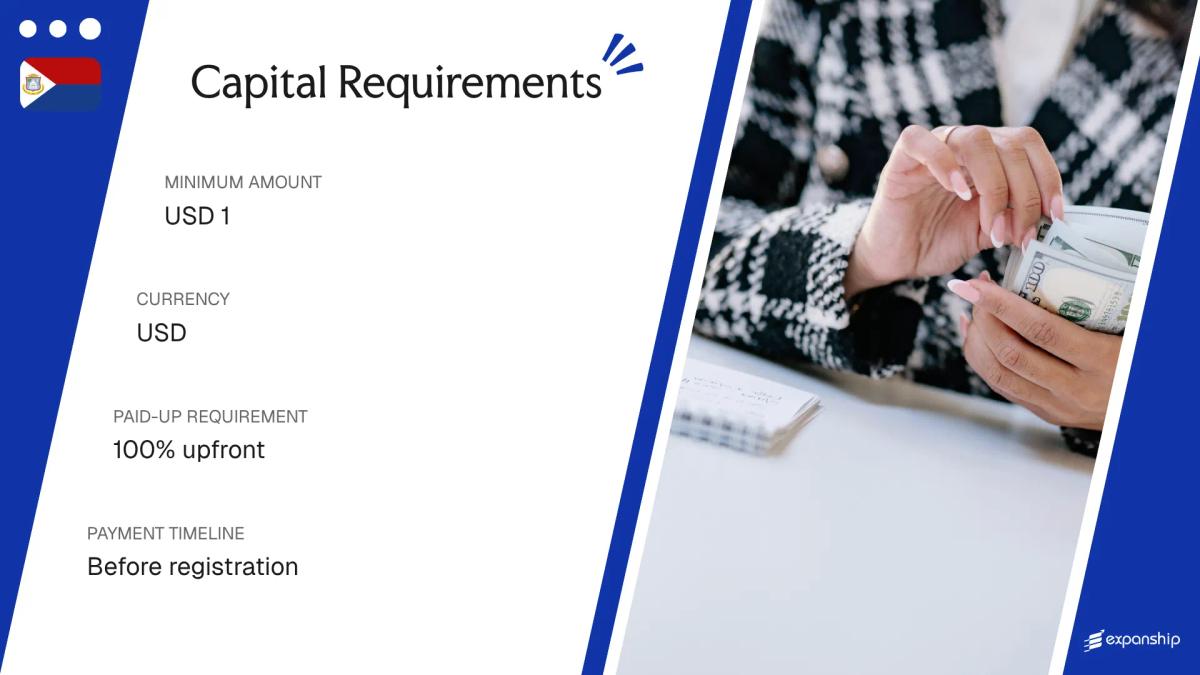
| Minimum Authorized Share Capital | USD 1 for a BV; USD 45,000 for an NV (general statutory threshold) |
| Maximum Authorized Share Capital | No statutory maximum |
| Minimum Paid-Up Capital | No statutory minimum paid-up amount for a BV |
| Paid-Up Requirement at Incorporation | At least one share must be taken up and paid at incorporation |
| Accepted Currency | US Dollar (USD), the official currency of the BES islands |
| Accepted Forms of Contribution | Cash or non-cash contributions (in-kind), subject to valuation |
| Timeframe to Deposit Capital | No statutory deadline beyond the initial share take-up at incorporation |
Even where no paid-up minimum applies, your articles of incorporation must still define an authorized capital structure. The KvK BES will not register an entity without a properly documented share capital clause in the deed of incorporation.
Company Secretary Requirements in Bonaire, Sint Eustatius and Saba
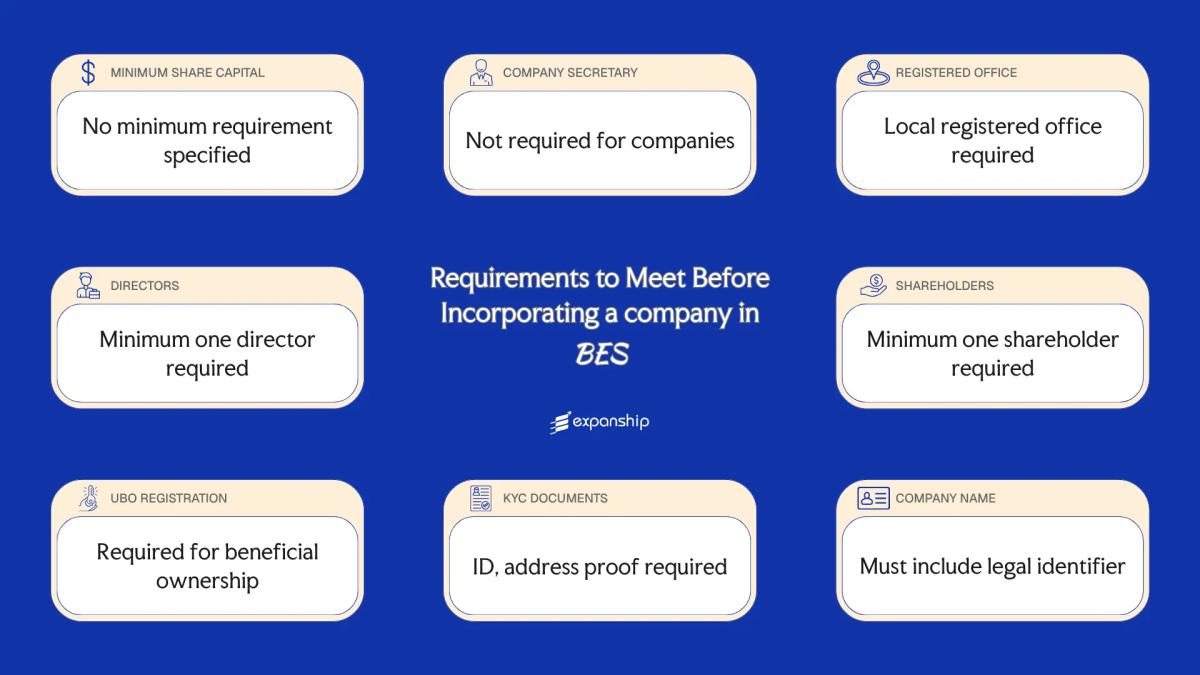
Under the Dutch Caribbean legal framework governing the BES islands, the company secretary requirements Bonaire Saba structure differs from many European jurisdictions. There is no statutory obligation to appoint a company secretary for a private limited liability company (BV) incorporated under the applicable BES civil law regime.
That said, a local representative or registered agent serving the firm is commonly used in practice to maintain ongoing compliance with the Dutch Caribbean Business Register (Kamer van Koophandel). This agent handles administrative filings, receives official correspondence on behalf of the entity, and liaises with local authorities when required.
Qualification criteria for serving as a local representative or registered agent include:
- Must be a natural person or legal entity with a recognized presence in the BES islands
- No specific licensing regime is prescribed, though the agent must be identifiable and reachable within the jurisdiction
- Corporate service providers operating locally are eligible to serve in this capacity
- Non-residents may face practical restrictions in fulfilling representative functions effectively

Company Incorporation in Bonaire, Sint Eustatius and Saba
Set up your business entity in the BES islands with accurate filings, local compliance support, and proper registration through the Dutch Caribbean Business Register.
Registered Office Requirements in Bonaire, Sint Eustatius and Saba
Registered office requirements BES islands follow the civil law framework applicable to these Dutch special municipalities, where each registered company must maintain a physical address on the island where it is incorporated that corresponds to its statutory seat as recorded in the commercial register held by the Chamber of Commerce (Kamer van Koophandel). Failure to maintain a valid local address can result in administrative sanctions, including deregistration of the entity from the commercial register.
- A physical address is required; a PO box alone does not satisfy the registered office obligation.
- The address must be located on the specific BES island where the company holds its statutory seat.
- Virtual office arrangements may be used provided they supply a genuine, reachable physical address on the relevant island.
- No ownership of premises is required; a lease or service agreement covering the address is sufficient.
- The registered address is publicly listed in the commercial register and is accessible to third parties.
- Any change of registered address must be formally notified to the Kamer van Koophandel; the update takes effect upon registration, not upon the internal decision to relocate.
Director Requirements in Bonaire, Sint Eustatius and Saba
Under the Civil Code of Bonaire, Sint Eustatius and Saba (Book 2, applicable to the BES islands following the 2010 constitutional reforms), directors of a besloten vennootschap (BV) assume statutory duties of administration and accountability from the moment of appointment. Upon taking office, each director bears personal liability for mismanagement, failure to file required financial statements, or acts performed in the name of the company prior to its formal registration.
| Parameter | Detail |
|---|---|
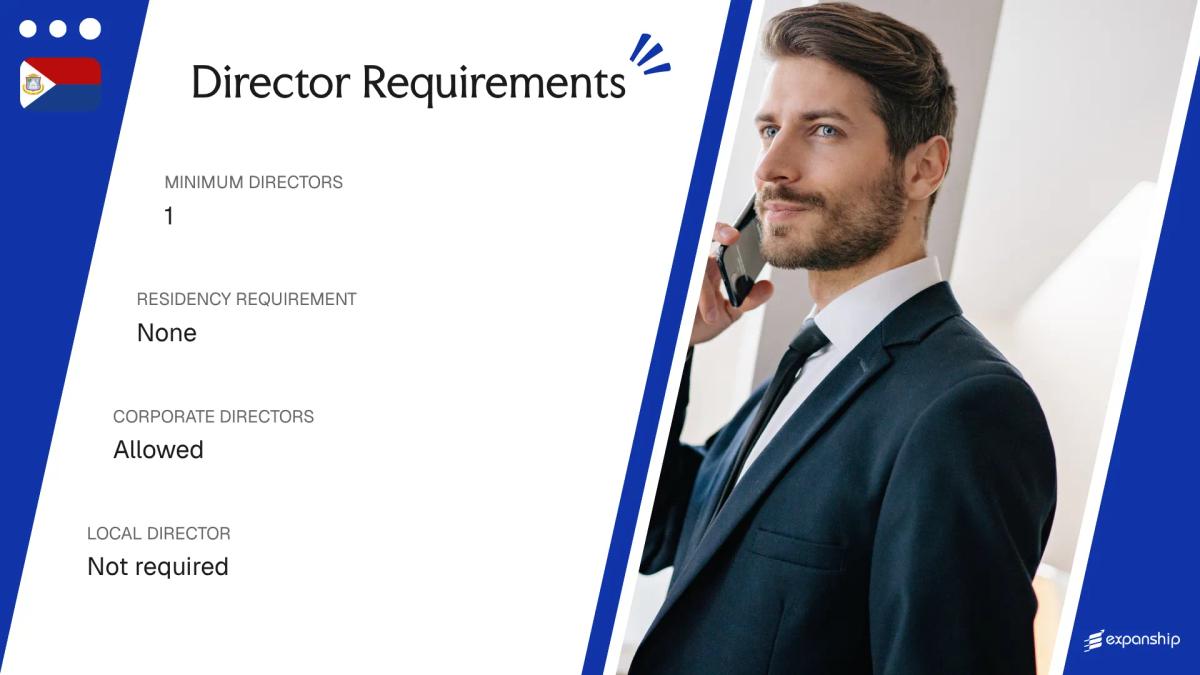
| Minimum Number of Directors | One director is required. |
| Maximum Number of Directors | No statutory maximum is prescribed. |
| Local/Resident Director Required | No residency requirement applies under BES corporate law. |
| Nationality Restrictions | No nationality restrictions are imposed. |
| Minimum Age Requirement | Directors must be at least 18 years of age. |
| Corporate Directors Permitted | Corporate directors are generally permitted under BES BV regulations. |
| Director Must Be a Shareholder | No statutory requirement for a director to hold shares. |
| Publicly Listed on Registry | Director information is recorded in the BES Chamber of Commerce trade register. |
| Disqualification Conditions | A director may be disqualified following a judicial declaration of mismanagement or a court-imposed prohibition under Dutch Caribbean civil law principles. |
Despite being a Dutch public entity, the BES islands do not require any director to be a Dutch national or a resident of the Netherlands or the islands themselves, meaning a company can be fully directed from abroad without triggering a local presence obligation.
Shareholder Requirements in Bonaire, Sint Eustatius and Saba
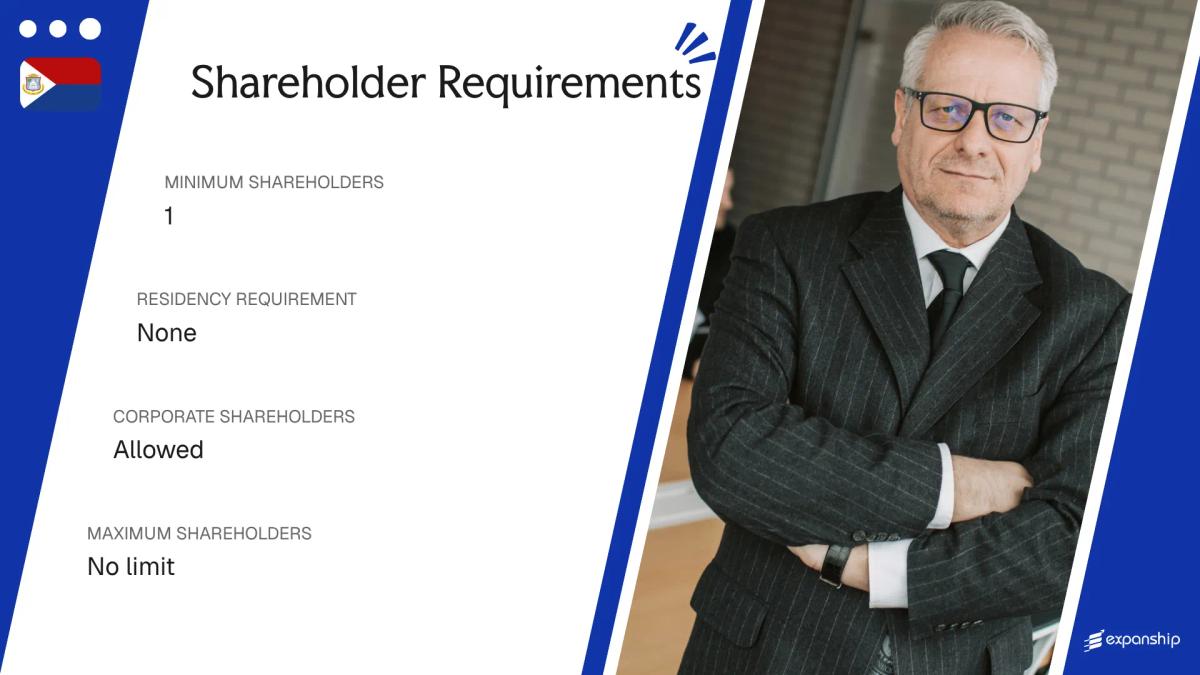
Under the corporate framework applicable to the BES islands, a Naamloze Vennootschap (NV) requires at least one shareholder, as does the Besloten Vennootschap (BV). No statutory maximum applies to either entity type, meaning sole shareholder structures are permitted for both.
Nationality and Residency Restrictions
Meeting shareholder requirements Bonaire incorporation rules impose no nationality or residency conditions on shareholders. Foreign individuals and entities may hold 100% of the share capital without restriction.
Corporate Shareholders
Corporate entities are permitted to act as shareholders in both NV and BV structures. No additional conditions specific to corporate shareholders are imposed under BES islands shareholding rules beyond standard identification and KYC obligations.
Shareholder Liability
Liability is limited to each shareholder's capital contribution. No general circumstances extend personal liability beyond that amount, though exceptions may arise in cases of fraud or improper conduct under applicable civil law principles.
Register of Shareholders
A register of shareholders must be maintained at the company's registered office. This register is not publicly accessible, but it must be kept current and made available to competent authorities upon request.
Shareholder Structuring Support for Your BES Islands Incorporation
Get guidance on structuring your shareholding arrangement in line with the corporate requirements applicable to Bonaire, Sint Eustatius and Saba.
UBO / Beneficial Ownership Disclosure Requirements in Bonaire, Sint Eustatius and Saba
UBO disclosure requirements BES islands derive from Dutch Caribbean anti-money laundering legislation, which extends to Bonaire, Sint Eustatius, and Saba through the Wet ter voorkoming van witwassen en financieren van terrorisme BES (Wwft BES). Under this framework, a beneficial owner is generally defined as any natural person holding or controlling more than 25% of shares, voting rights, or ownership interest in a legal entity.
- Identify all natural persons meeting the 25% ownership or control threshold within the entity structure.
- Submit UBO information to the Kamer van Koophandel (Chamber of Commerce) for the BES islands at the time of registration.
- Retain supporting documentation internally that evidences the basis for each UBO designation.
- Report any changes in beneficial ownership to the Chamber of Commerce without undue delay.
| Parameter | Detail |
|---|---|
| Ownership Threshold for UBO Status | More than 25% of shares, voting rights, or ownership interest |
| Filing Authority | Kamer van Koophandel (Chamber of Commerce), BES islands |
| Disclosure Deadline at Incorporation | At the time of registration |
| Publicly Accessible Register | No statutory requirement for full public access under current BES framework |
| Penalties for Non-Disclosure | Subject to sanctions under Wwft BES; specific penalty amounts not publicly codified in detail |
| Ongoing Update Obligation | Yes; changes must be reported without undue delay |
KYC / Document Requirements in Bonaire, Sint Eustatius and Saba
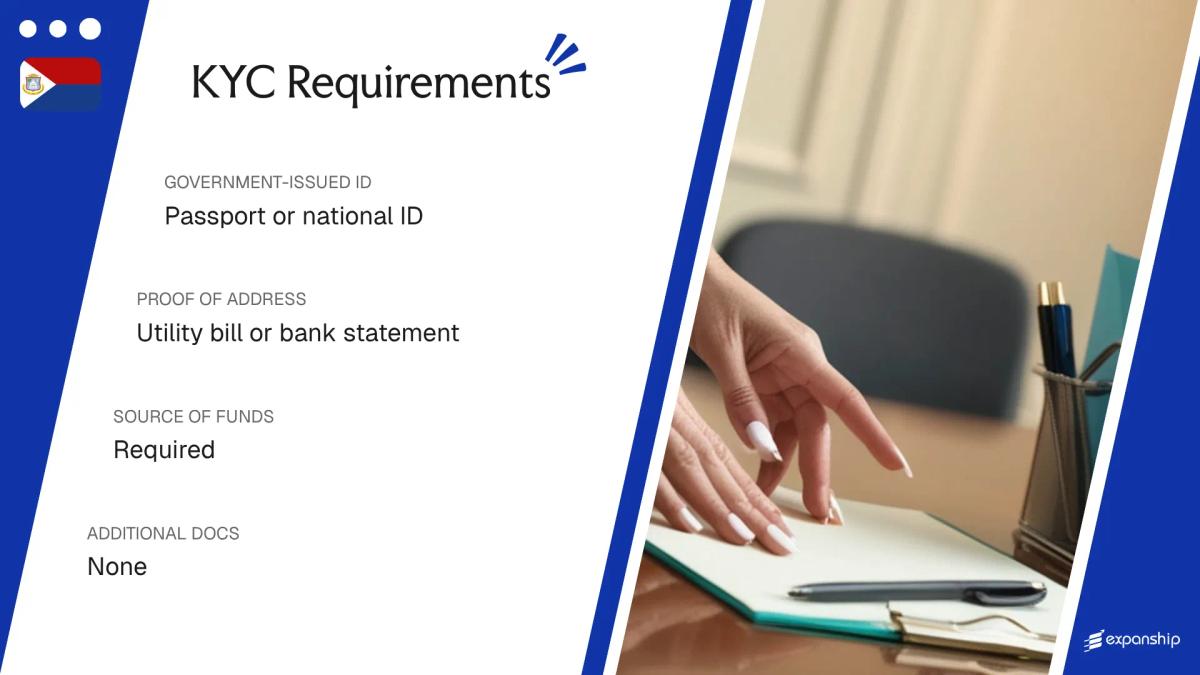
KYC requirements Bonaire Sint Eustatius Saba are governed by the Wet ter voorkoming van witwassen en financieren van terrorisme BES (Wwft BES), which obliges notaries and service providers to conduct customer due diligence before and during incorporation. The FIU-Netherlands receives disclosures of unusual transactions reported under this framework.
Individual / Personal Documents
- Valid government-issued passport or national identity card for each director, shareholder, and UBO
- Proof of residential address dated within three months, such as a utility bill or official bank statement
- Completed and signed KYC intake form as required by the notary or corporate service provider
- Recent passport-sized photograph may be requested depending on the notary's internal procedures
Corporate Documents
- Certified copy of the certificate of incorporation of the corporate shareholder or director
- Current articles of association or equivalent constitutional document
- Register of directors and register of shareholders, both up to date
- Proof of the entity's registered office address, such as a utility bill or official correspondence
Source of Funds Documentation
- Bank statements covering a minimum of three to six months demonstrating the origin of capital
- Audited financial statements where the entity has been operational for more than one financial year
- A written source of funds declaration signed by the beneficial owner may also be required
Notarisation and Apostille Requirements
- Documents issued outside the Netherlands or the BES islands generally require an apostille under the Hague Convention
- Notarised translations into Dutch are required for documents not already in Dutch, English, or another accepted language
- Corporate documents from non-Hague Convention countries may require legalisation through a Dutch embassy or consulate
Incorporation filings in the BES islands are commonly delayed when residential address documents for UBOs or directors are older than three months at the date of submission.
Company Name Requirements in Bonaire, Sint Eustatius and Saba
Company name requirements in Bonaire Saba follow a pre-incorporation review process in which the proposed name is assessed for uniqueness and compliance before registration is confirmed. Names that are identical or confusingly similar to an existing registered entity will be rejected.
Structurally, the name must include a legal suffix reflecting the chosen entity type, such as N.V. (Naamloze Vennootschap) or B.V. (Besloten Vennootschap). Dutch is the primary administrative language of the BES islands, though names in other languages are generally not prohibited.
Certain words suggesting government affiliation, financial regulation, or royal association require prior approval from the relevant authority before they may be included in a business name. Words that are offensive or misleading as to the nature of the firm are outright prohibited.
Name reservation is generally available as a preliminary step before formal incorporation. Reserved names are held for a limited period, after which the reservation lapses if incorporation has not proceeded.
Compliance Services for Companies in Bonaire, Sint Eustatius and Saba
Maintain your company's standing across the BES islands with ongoing compliance support, including regulatory filings and statutory obligations.
Conclusion
The incorporation requirements Bonaire Sint Eustatius Saba imposes on foreign investors are governed primarily through Dutch Caribbean civil law, with the RCN overseeing registration and ongoing compliance. Registered capital thresholds, local address obligations, and UBO disclosure under the BES beneficial ownership register represent some of the more consequential elements a business must address before commencing operations. Once these structural requirements are understood, the practical focus shifts toward execution: preparing notarial deeds, satisfying KYC documentation standards, and filing with the appropriate authorities in a sequence that determines your entity's legal standing from day one.
Expanship's Corporate Services for Bonaire, Sint Eustatius and Saba
Incorporating under the BES islands' legal framework, which applies Dutch Caribbean civil law through the Tax and Customs Administration BES and the Chamber of Commerce Bonaire, involves specific registration, compliance, and disclosure obligations that require careful coordination from the outset. Expanship's corporate services for Bonaire, Sint Eustatius and Saba are structured to reduce that operational burden, handling the procedural groundwork so your business can focus on its actual activities.
Beyond formation, Expanship supports a broader range of corporate needs:
- We prepare and file all company registration documentation with the relevant BES authorities.
- Our team provides a registered agent and local office address to satisfy statutory presence requirements.
- We manage government filings and liaise directly with regulatory bodies on your behalf.
- Post-incorporation compliance, including annual obligations, is tracked and managed for your entity.
- Banking introductions are facilitated to support your firm's operational setup in the jurisdiction.
- Tax registration and coordination with local authorities are handled as part of our onboarding process.
To discuss your requirements, contact Expanship Bonaire Sint Eustatius and Saba.
Frequently Asked Questions (FAQ)
No, the BES islands operate under a distinct legal framework from the European Netherlands, and the share capital requirements are not identical. Under the rules applicable to the BES islands, a private limited liability company (NV or BV equivalent) can be incorporated with a relatively low nominal share capital. You should confirm the current minimum with a local notary, as the applicable figure is set under BES-specific civil legislation rather than Dutch mainland corporate law.
Your entity must maintain a registered office address in the BES islands at all times, and any change must be formally updated with the relevant trade register. Failure to maintain a valid registered address can affect the company's legal standing and its ability to receive official correspondence from regulatory authorities. The update typically requires a notarial or administrative filing, depending on the nature of the change.
UBO registration in the BES islands falls under the framework introduced to align with international beneficial ownership transparency standards, and compliance is monitored in connection with broader AML obligations applicable in the islands. The financial supervision and AML framework in the BES islands is administered under legislation that extends Dutch financial regulatory standards to the islands as special municipalities. Non-compliance with UBO disclosure obligations can expose both the entity and its officers to regulatory sanctions.
A non-resident foreign national can serve as a director of a company incorporated in the BES islands, and there is no strict local residency requirement for directors. However, substance and tax considerations may be relevant depending on where the company's central management and control is exercised. If effective management is deemed to occur outside the BES islands, this could affect the entity's tax status and regulatory standing.
Yes, corporate shareholders are subject to additional KYC requirements beyond those applied to individuals. For a corporate shareholder, you will typically need to provide the entity's constitutional documents, proof of good standing, and KYC documentation on the underlying beneficial owners, tracing through to the natural persons who ultimately own or control the corporate shareholder. This chain-of-ownership requirement reflects AML obligations applicable across the BES islands.
Registration of a company name in the BES islands is governed by the local trade register, and a name registered on the European Netherlands mainland does not automatically block its use in the BES islands. That said, trademark protections and prior rights may still apply if the existing name holder has enforceable intellectual property rights covering the BES territory. A name availability check with the BES trade register is a necessary step before proceeding with incorporation.
Legal Disclaimer
The information provided in this article is for general informational purposes only and does not constitute legal, tax, or professional advice. While we strive to ensure the accuracy and timeliness of the content, laws and regulations are subject to change, and the application of laws can vary widely based on specific facts and circumstances.
Readers should not act upon this information without seeking professional counsel tailored to their individual situation. Expanship and its authors disclaim any liability for actions taken or not taken based on the content of this article.
For specific advice regarding your business setup, compliance requirements, or any legal matters, please consult with qualified legal and tax professionals in the relevant jurisdiction.